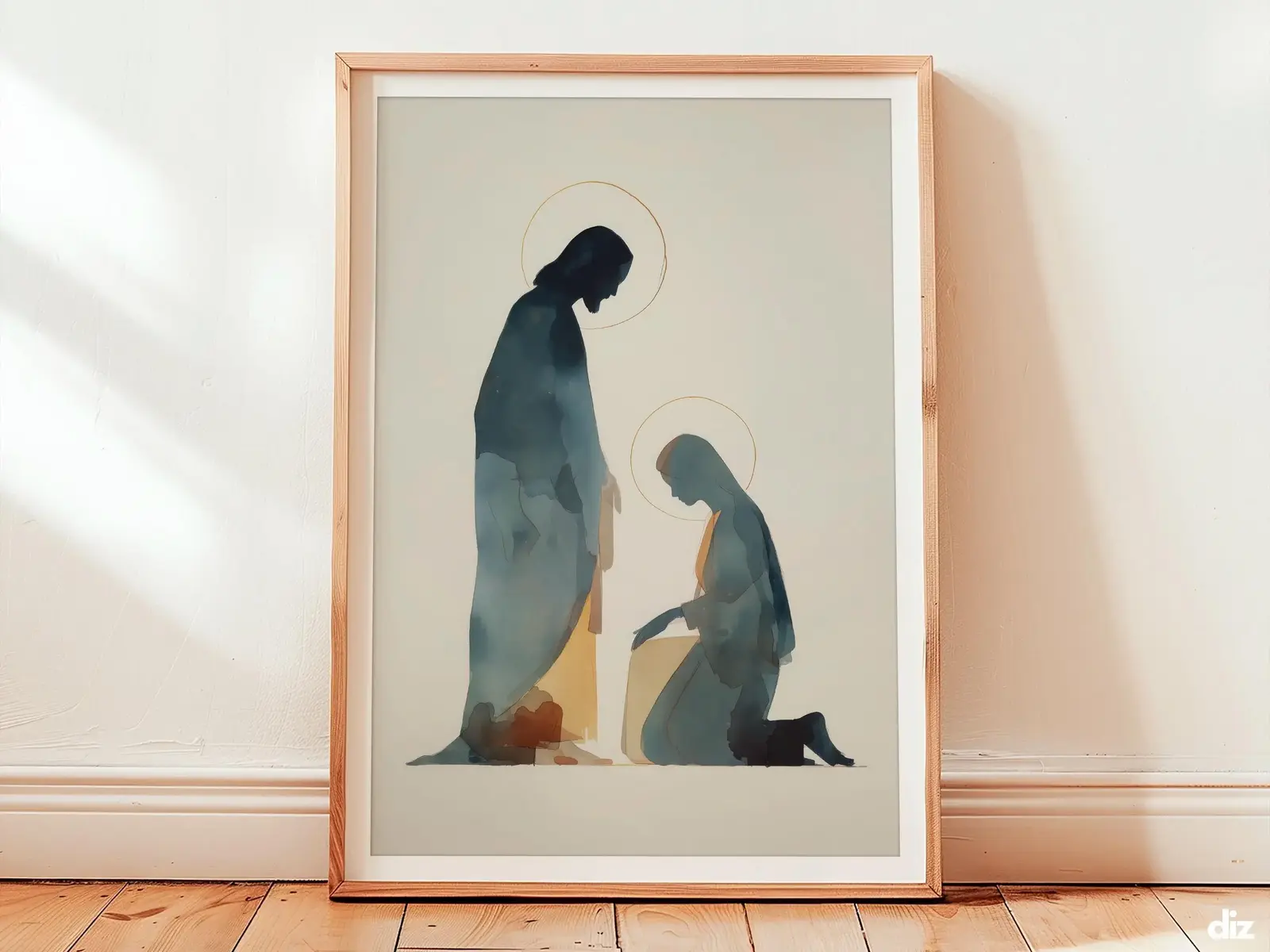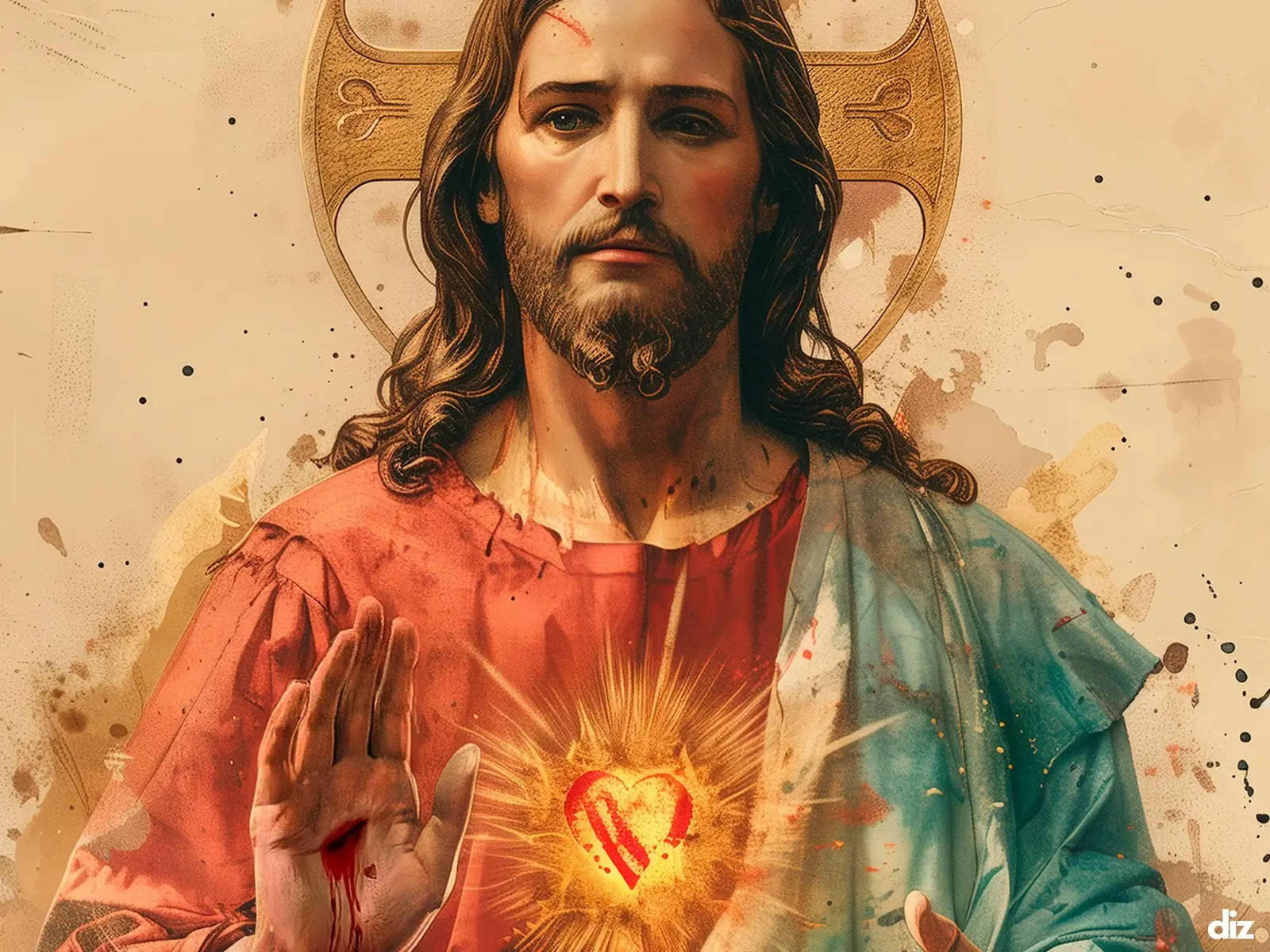
Sacred Art Centered on Christ
Contemporary sacred art exploring the presence, humanity, and divinity of Christ — through devotion, light, and form.
Christ as a visual presence
Unlike other sacred figures, Christ is depicted across an entire human arc: birth, teaching, encounter, suffering, death, and renewal.
This makes Christ uniquely present in domestic spaces. His image doesn’t freeze a single emotion; it carries movement.
A Christ-centered work can:
- ground a space emotionally
- introduce gravity without heaviness
- hold contradiction — pain and mercy, strength and surrender — without resolving it
This is why Christ remains the most represented figure in Christian art history: not because of authority, but because of proximity.
The gestures that define Christ in art
In Christ imagery, meaning is carried less by objects and more by gesture.
- The open hand — blessing, invitation, presence without force
- The downward gaze — humility, attention, compassion
- The wounded body — suffering acknowledged, not hidden
- The upright stance — endurance, resolve, offering
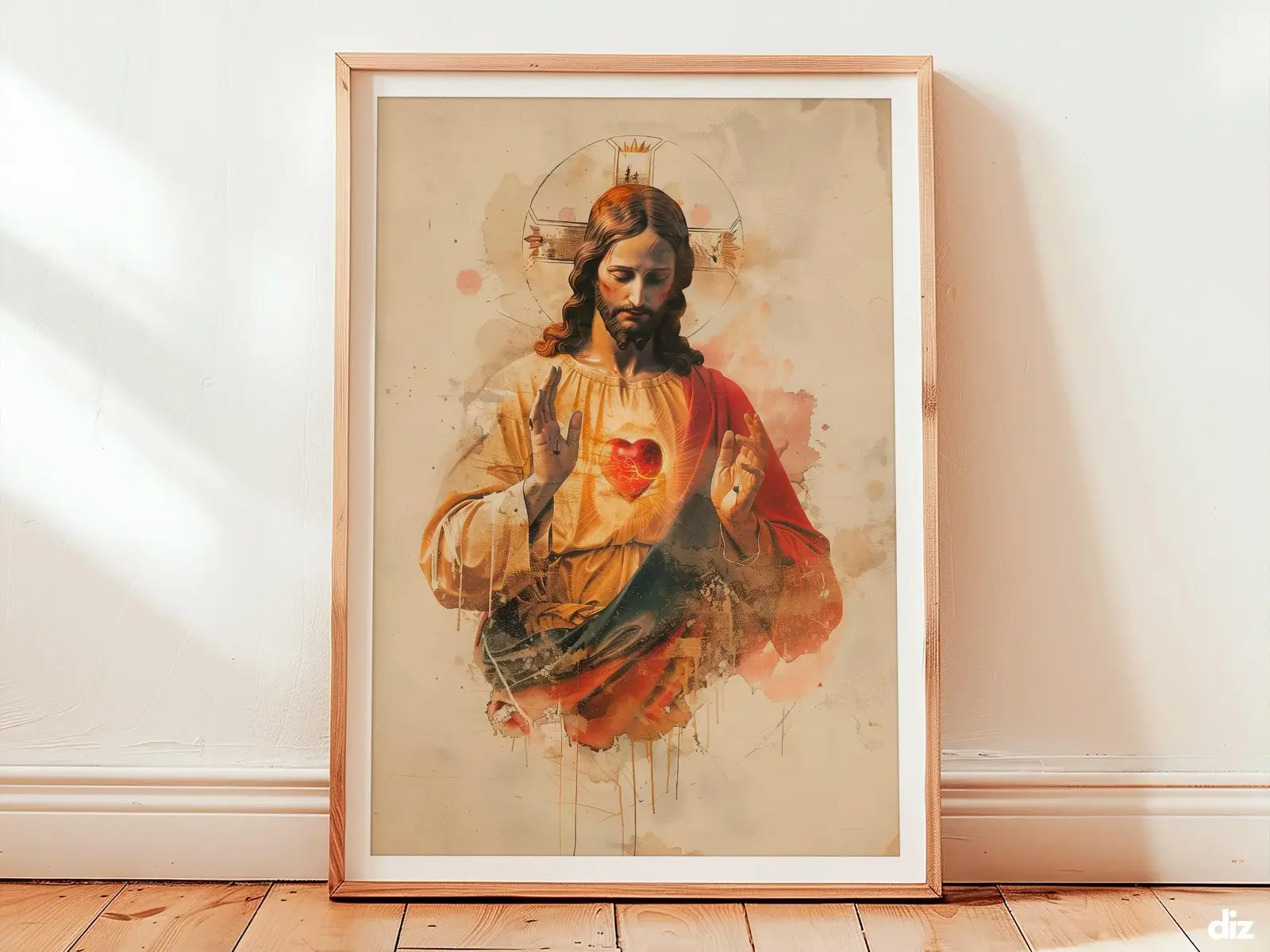
- The exposed heart — love made vulnerable
Light plays a decisive role. It doesn’t dramatize the figure; it reveals interiority.
Often, light becomes the silent counterpart to speech — saying what words cannot.
Choosing a Christ-centered work for your space
People tend to choose Christ imagery for different inner reasons.
A desire for meaning and grounding
Images of teaching, blessing, or quiet presence bring stability and direction without instruction.
A need to hold suffering with dignity
Scenes of Passion, Crucifixion, or the Sacred Heart resonate during seasons of difficulty, grief, or transformation.
At TheDizArt, these impulses are expressed through two visual languages:
- Classic Emotional — warmth, realism, devotional depth
- Minimal Devotional — form, restraint, contemplative silence
Neither simplifies the figure. Each offers a different way of staying close.
Central paths of Christ-centered devotion
Christ appears in sacred art through distinct moments, each carrying its own emotional weight.
- Life of Christ — teaching, encounter, and human presence
- Passion of Christ — suffering, endurance, and surrender
- Crucifixion — sacrifice without spectacle
- Resurrection — renewal without triumphalism
- Blessing & Presence — Christ as companion rather than figure
- Sacred Heart — love revealed through vulnerability
- Miracles & Encounters — compassion made visible
- Stations of the Cross — movement through suffering, step by step
Each path offers a different way of meeting the same presence.
Living with Christ-centered art
Christ imagery often becomes the moral and emotional axis of a space.
It works especially well in:
- living rooms, where shared life unfolds
- personal study or workspaces, offering quiet orientation
- prayer corners, without visual excess
- spaces where strength is needed without noise
What gives Christ-centered art its power is rarely scale or detail, but intentional placement and visual breathing room.
“Presence is not explained.
It is encountered“
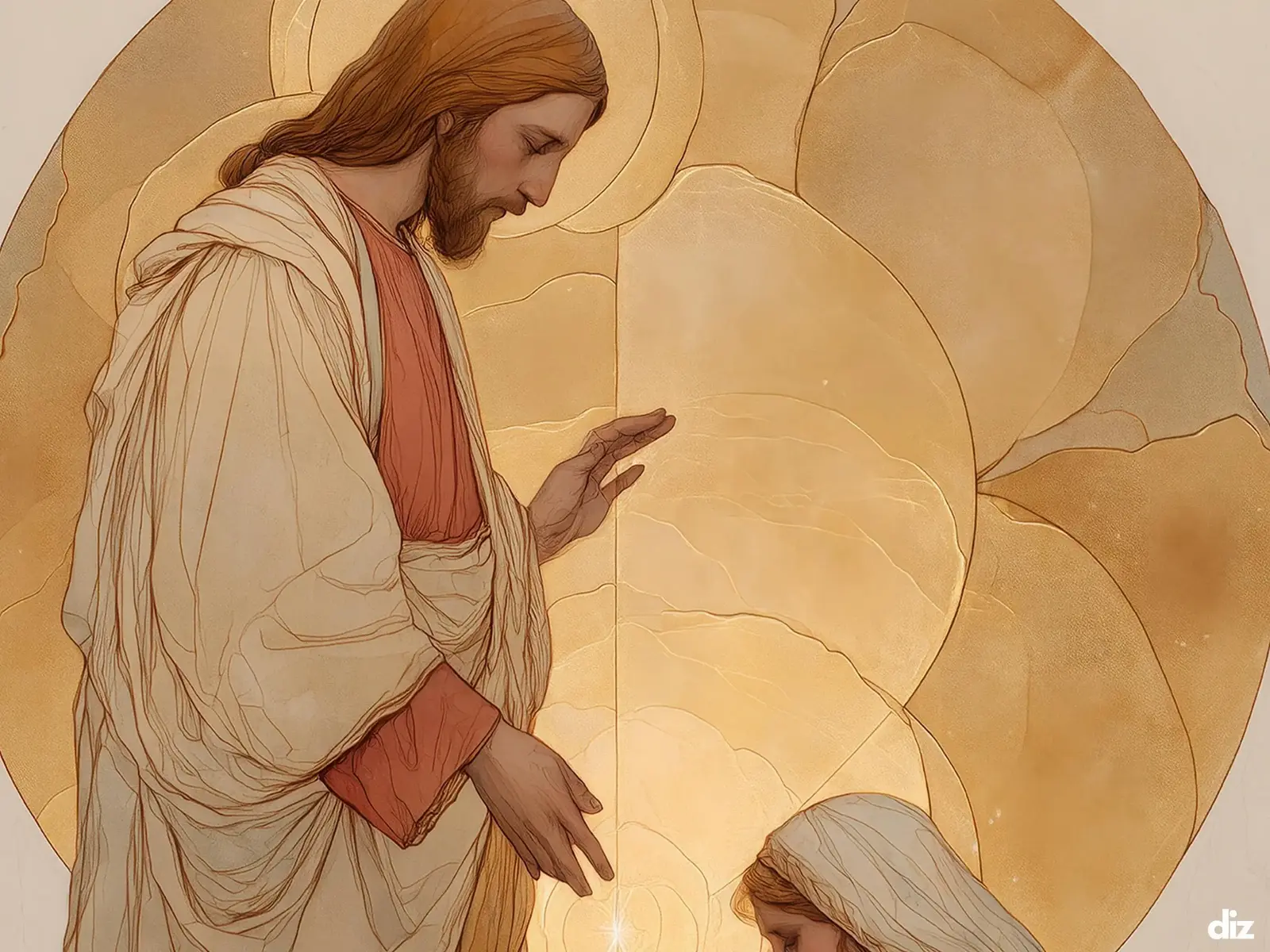
The following works reflect these paths of Christ’s presence — interpreted across warmth, restraint, and light.
Editorial Selection
A small curated selection reflecting the essence of Christ across both styles.
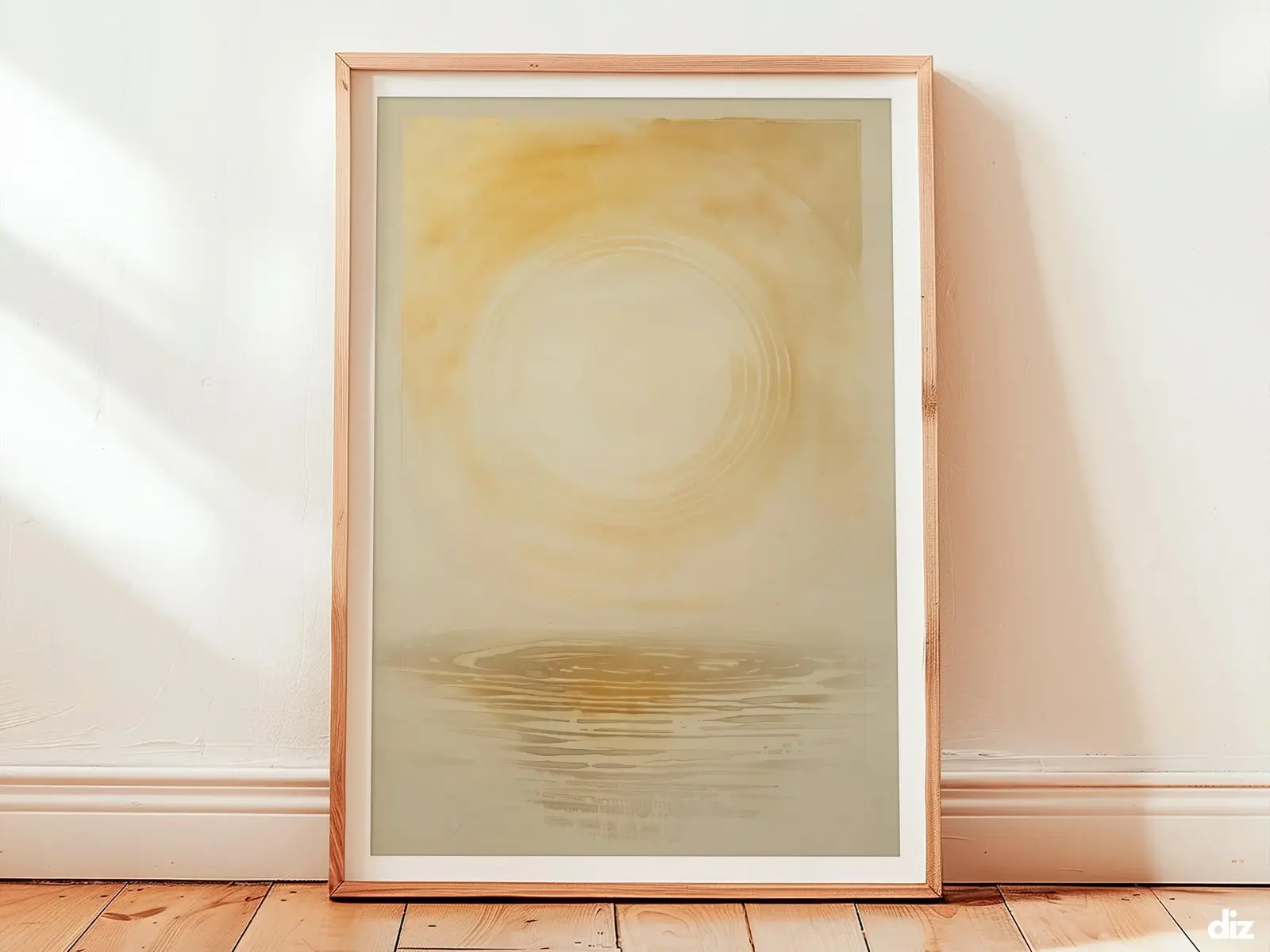
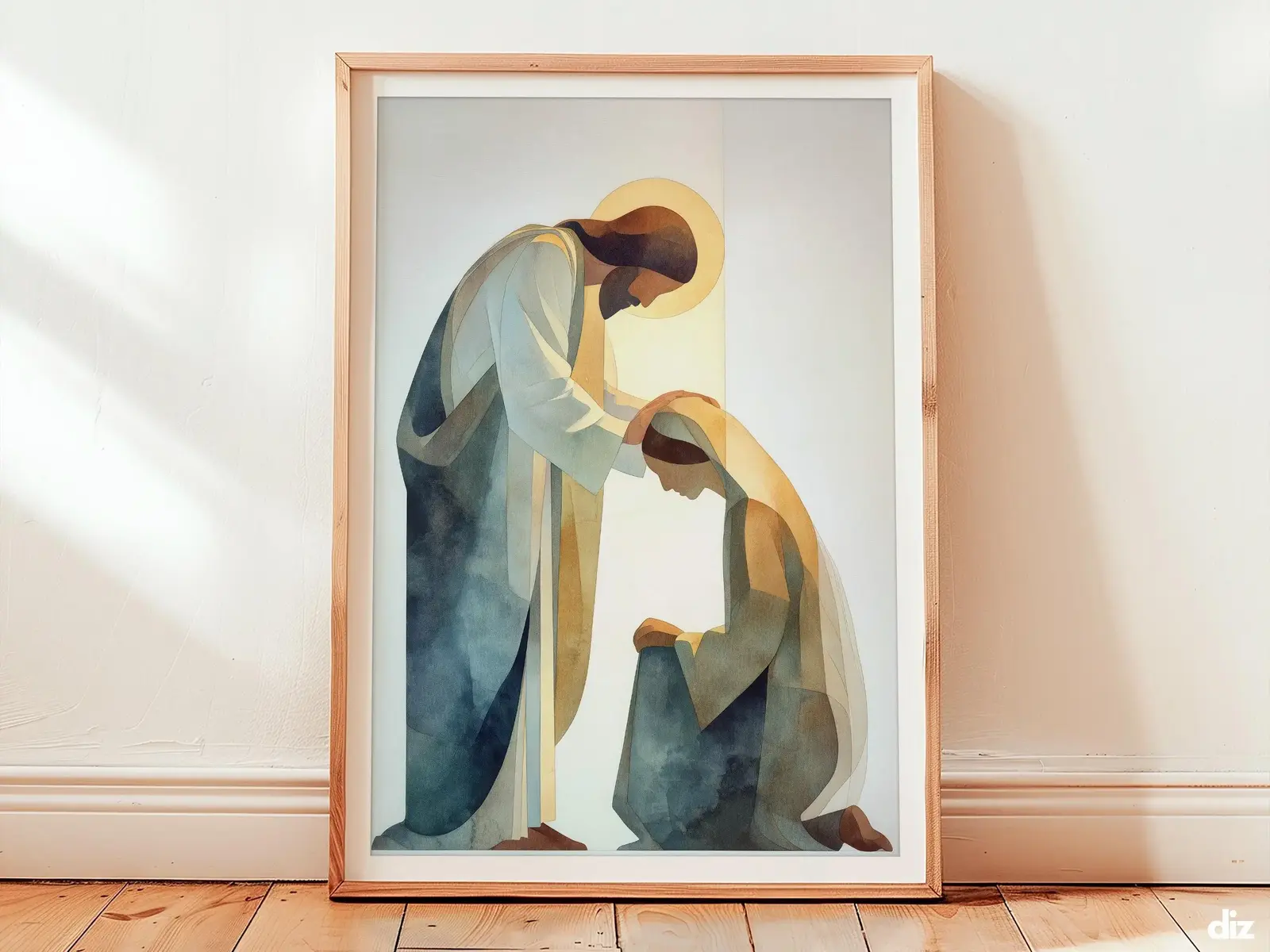
Woman Touches Jesus — Luminous Contact Point, Expanding Ripples
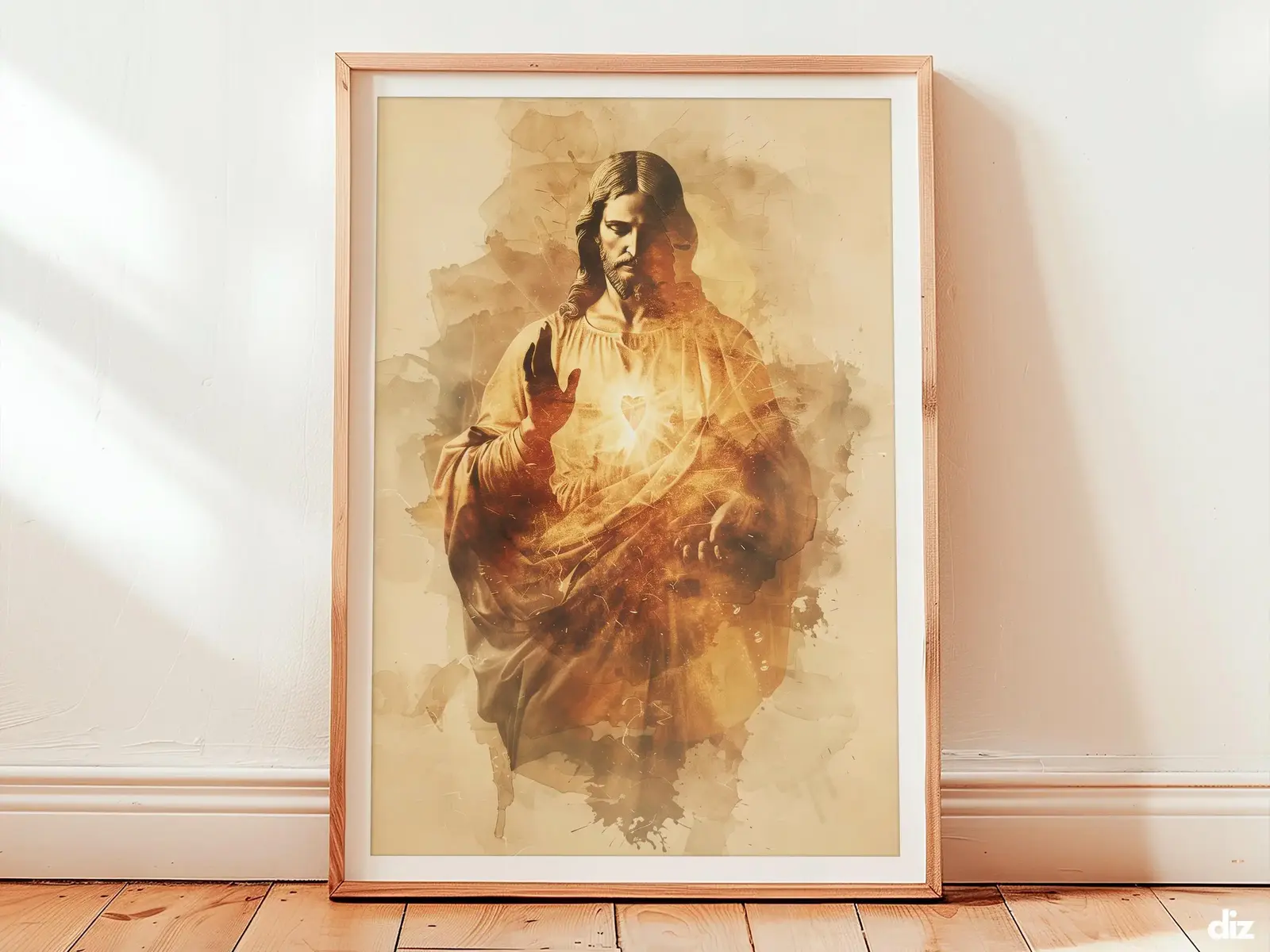
Sacred Heart of Jesus — Centered Icon, Blessing Hand (Pale Aura)
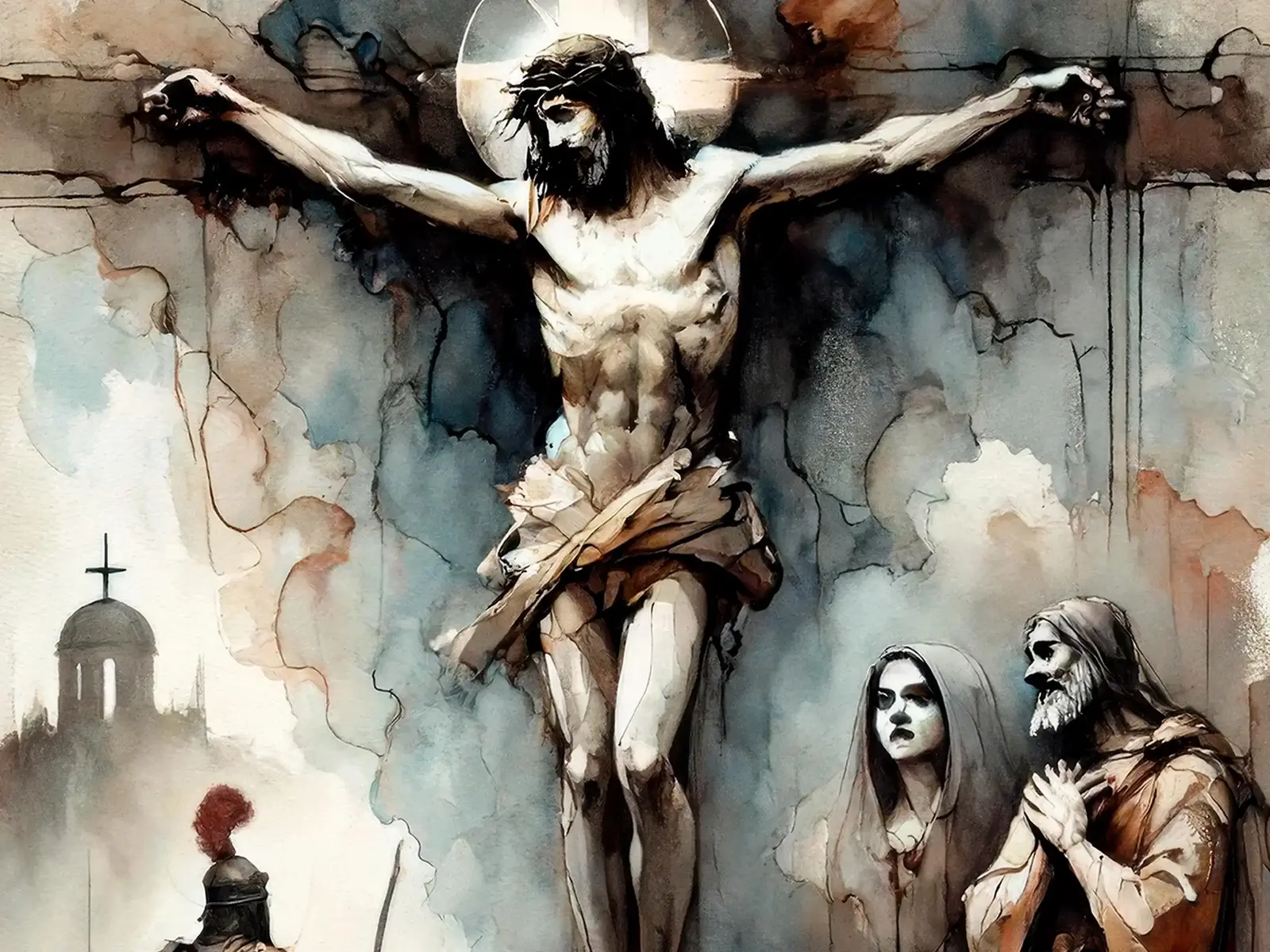
Crucifixion of Christ — Central Cross, Gathering at Dusk
Explore Christ — Classic Emotional
Figurative devotion shaped by warmth, gesture, and sacred tradition.
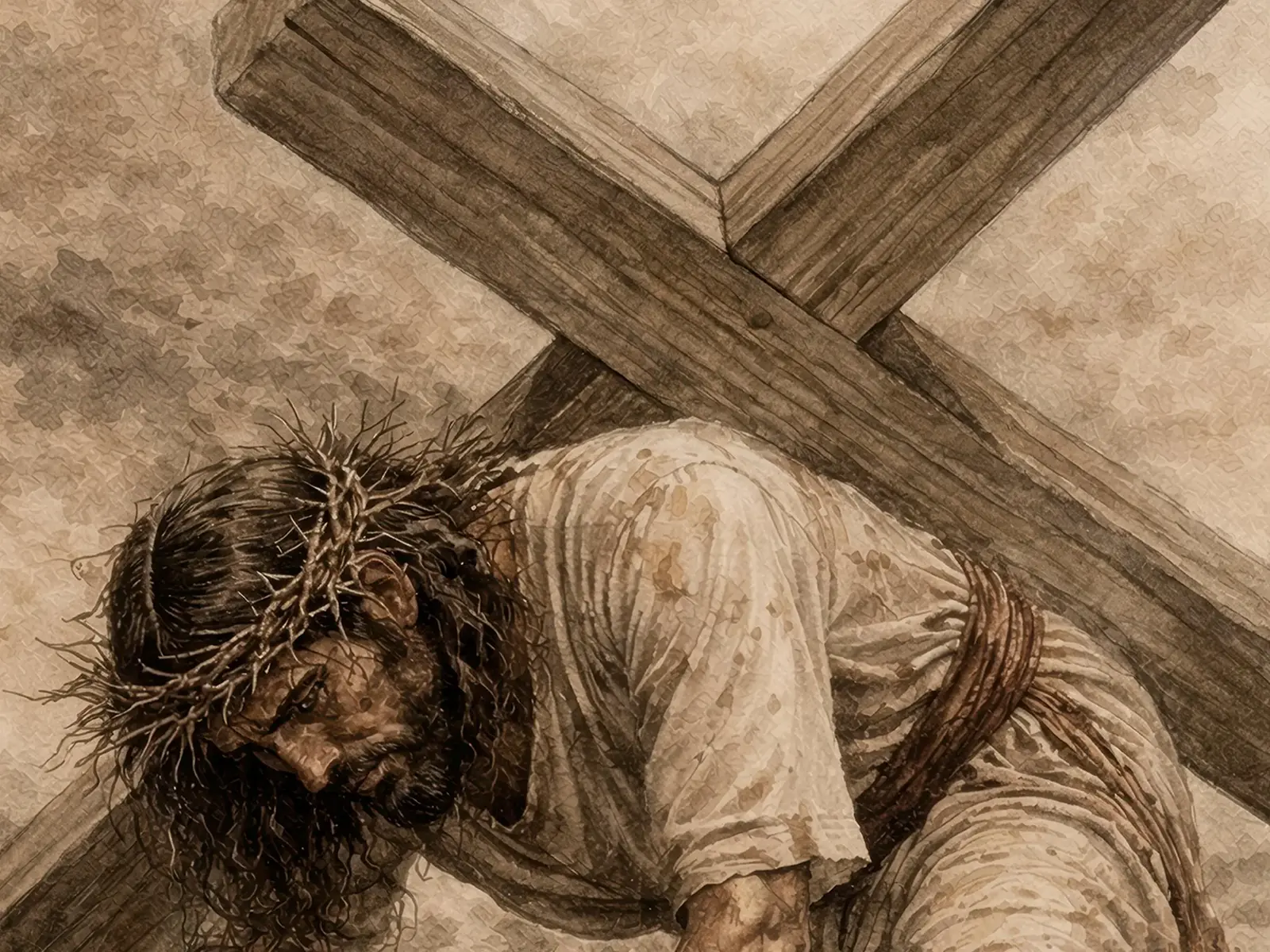
Station VII — Off-Center Collapse, Diagonal Cross Weight
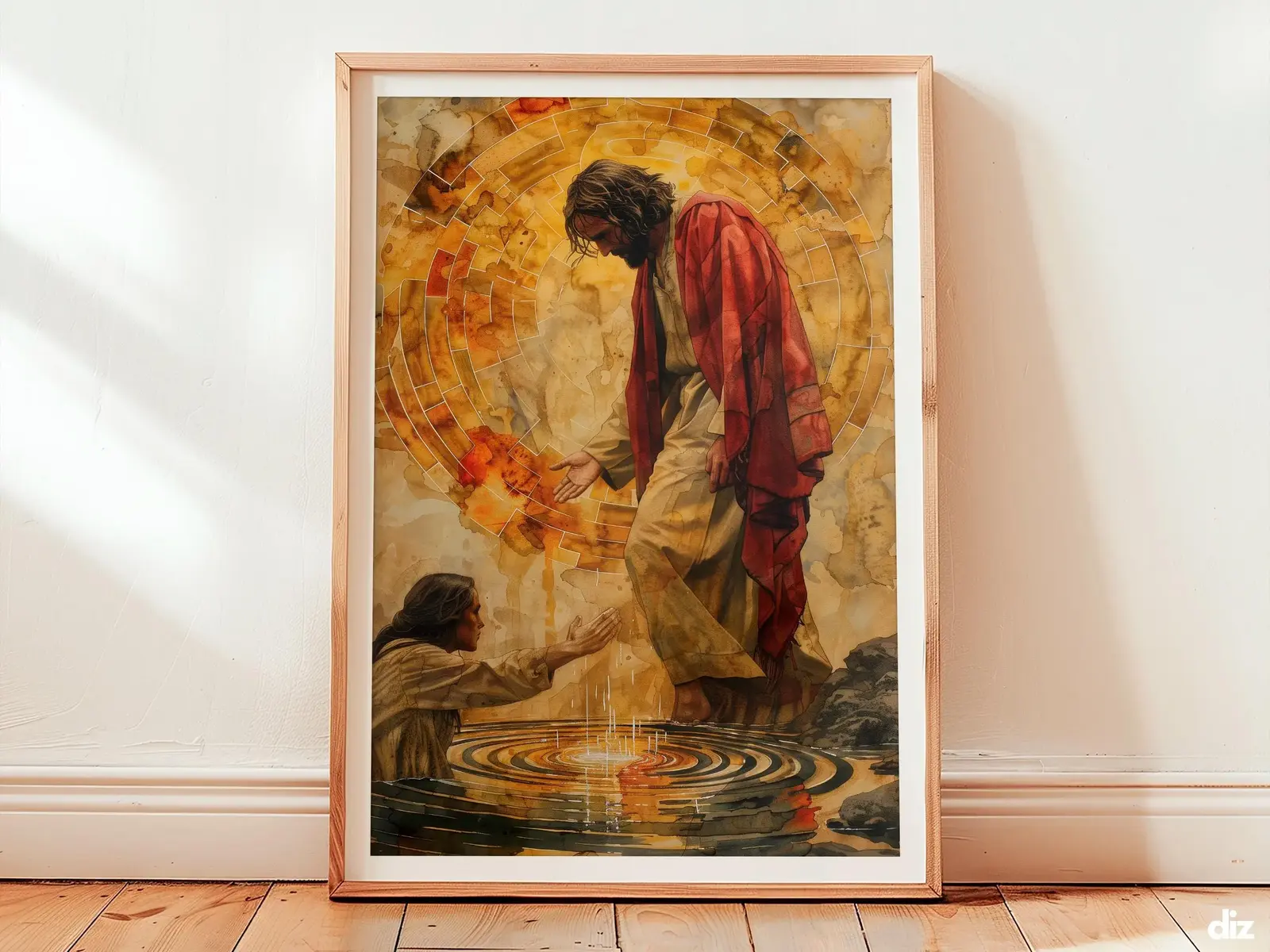
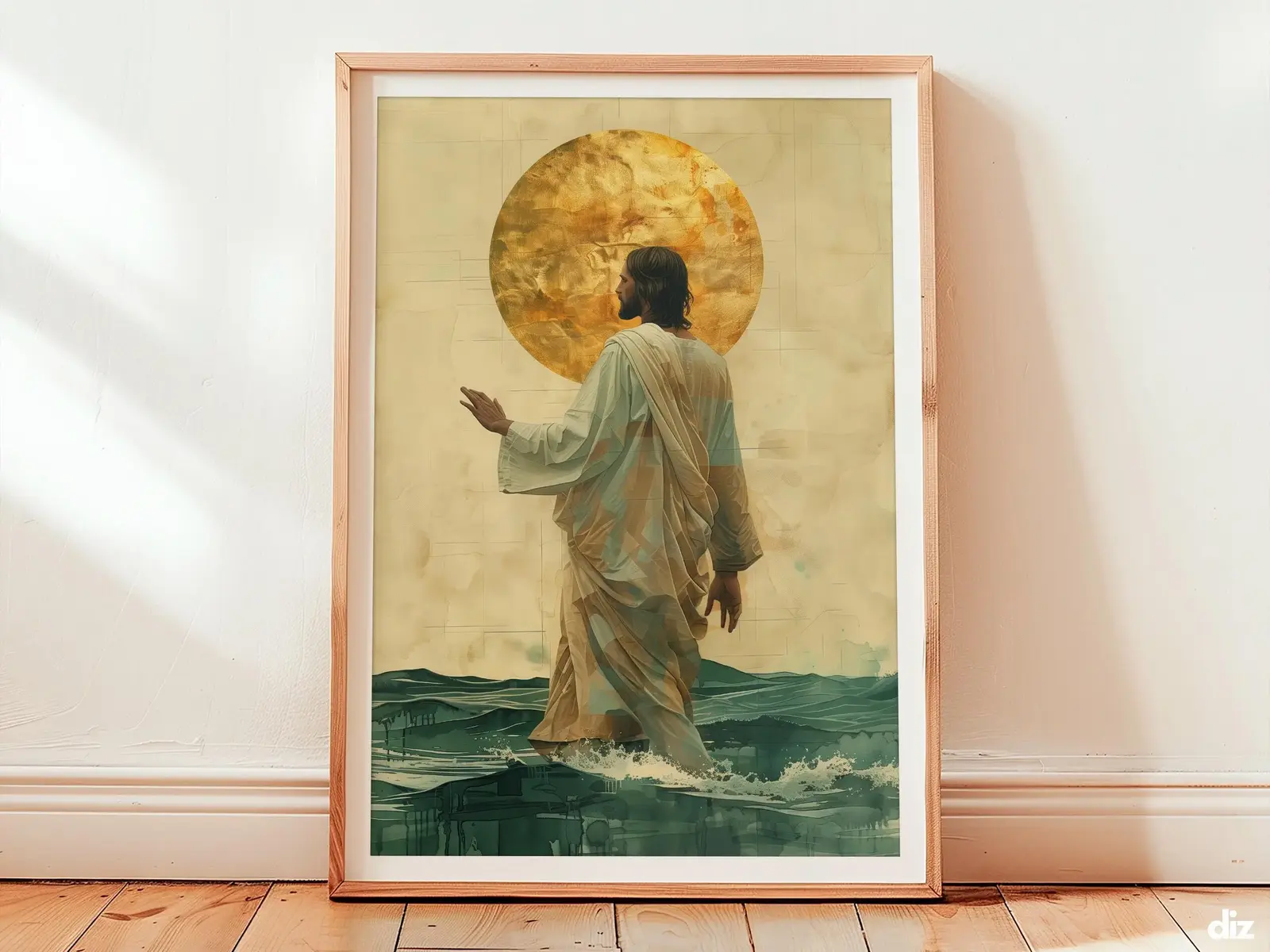
Christ in Blessing — Walking Figure, Hem-Brush of Golden Ripples
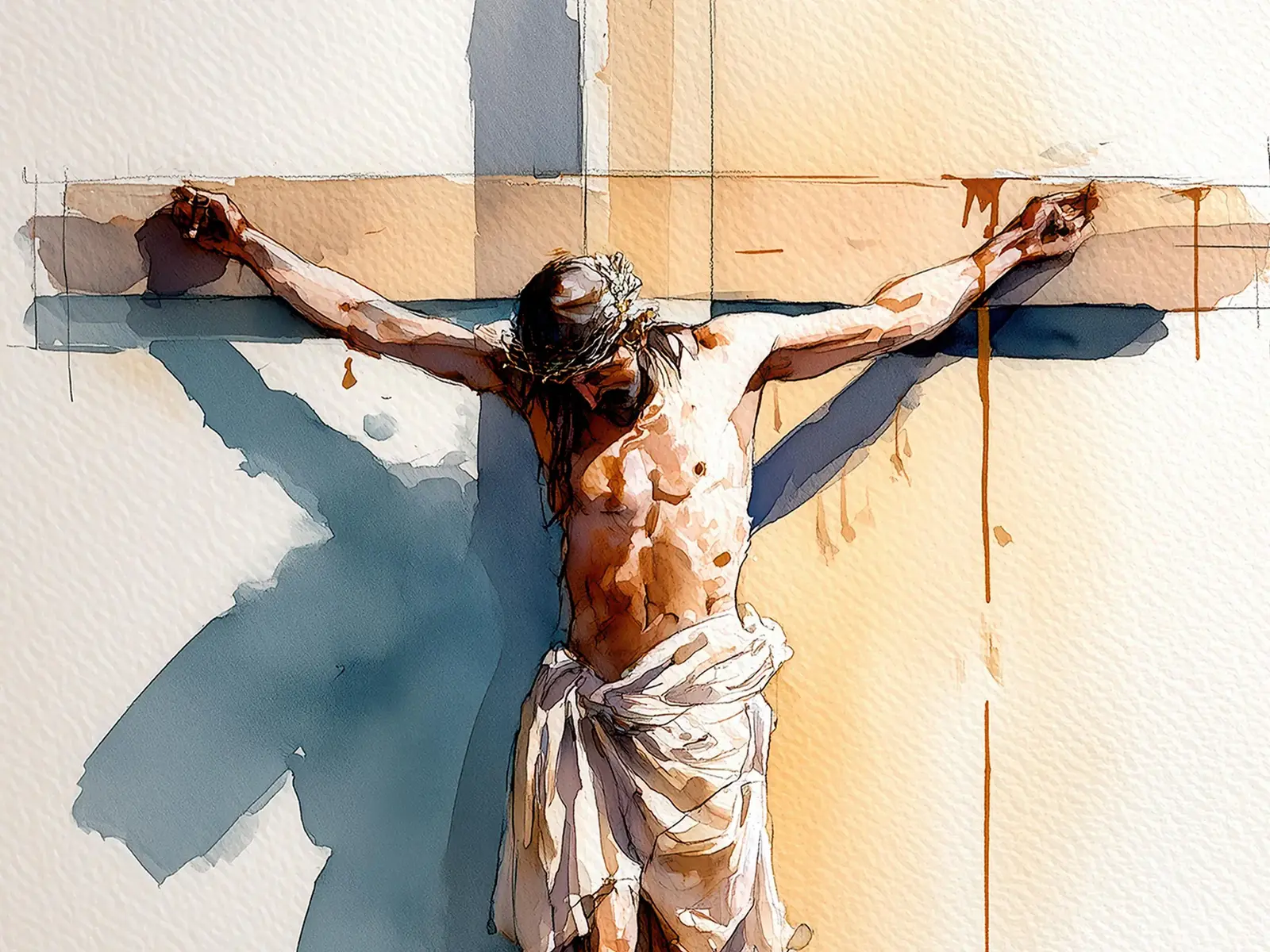
Christ on the Cross — Full Figure, Quiet Stillness
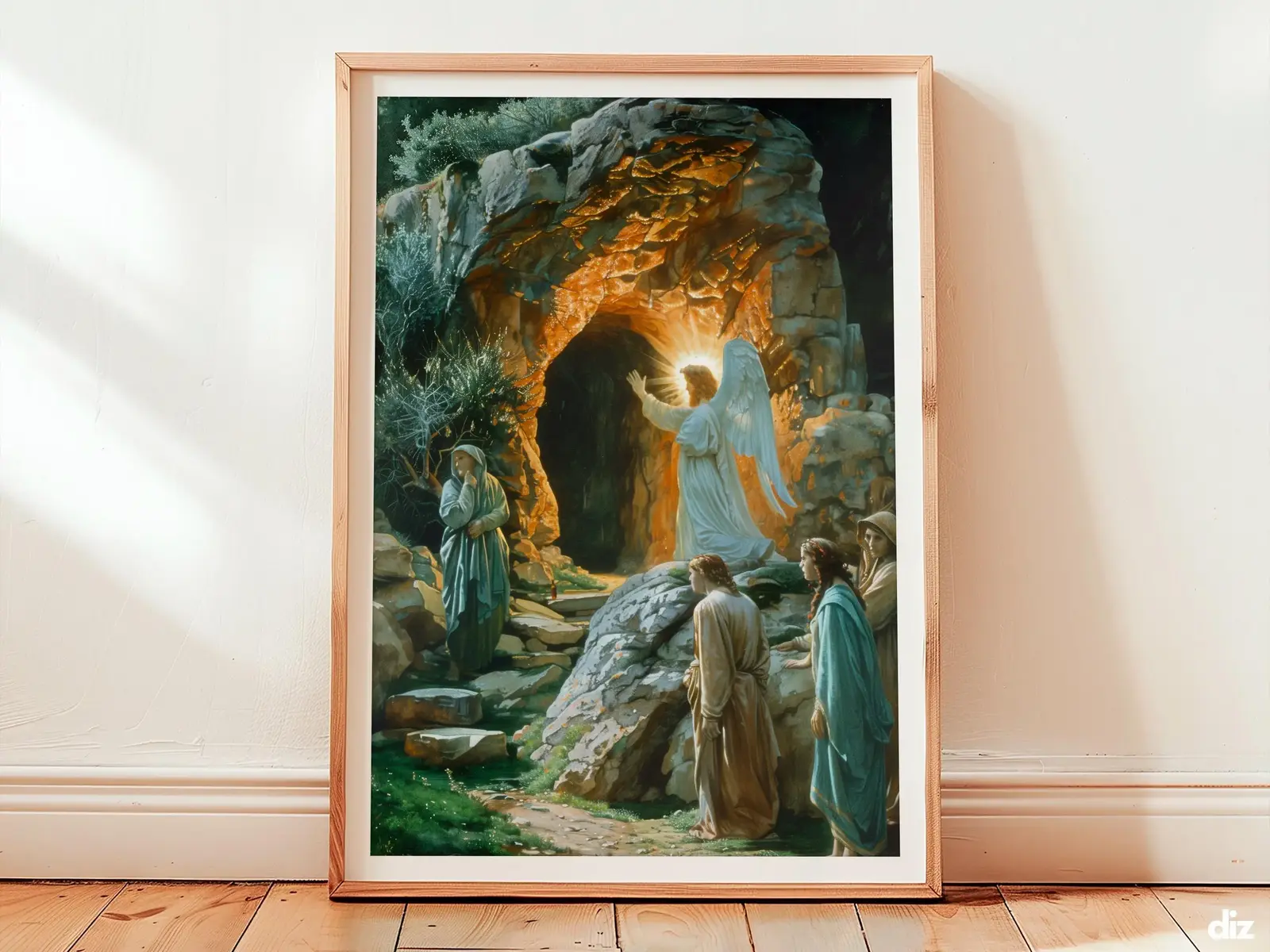
Resurrection Angel — Seated by the Rolled Stone, Dawn Glow
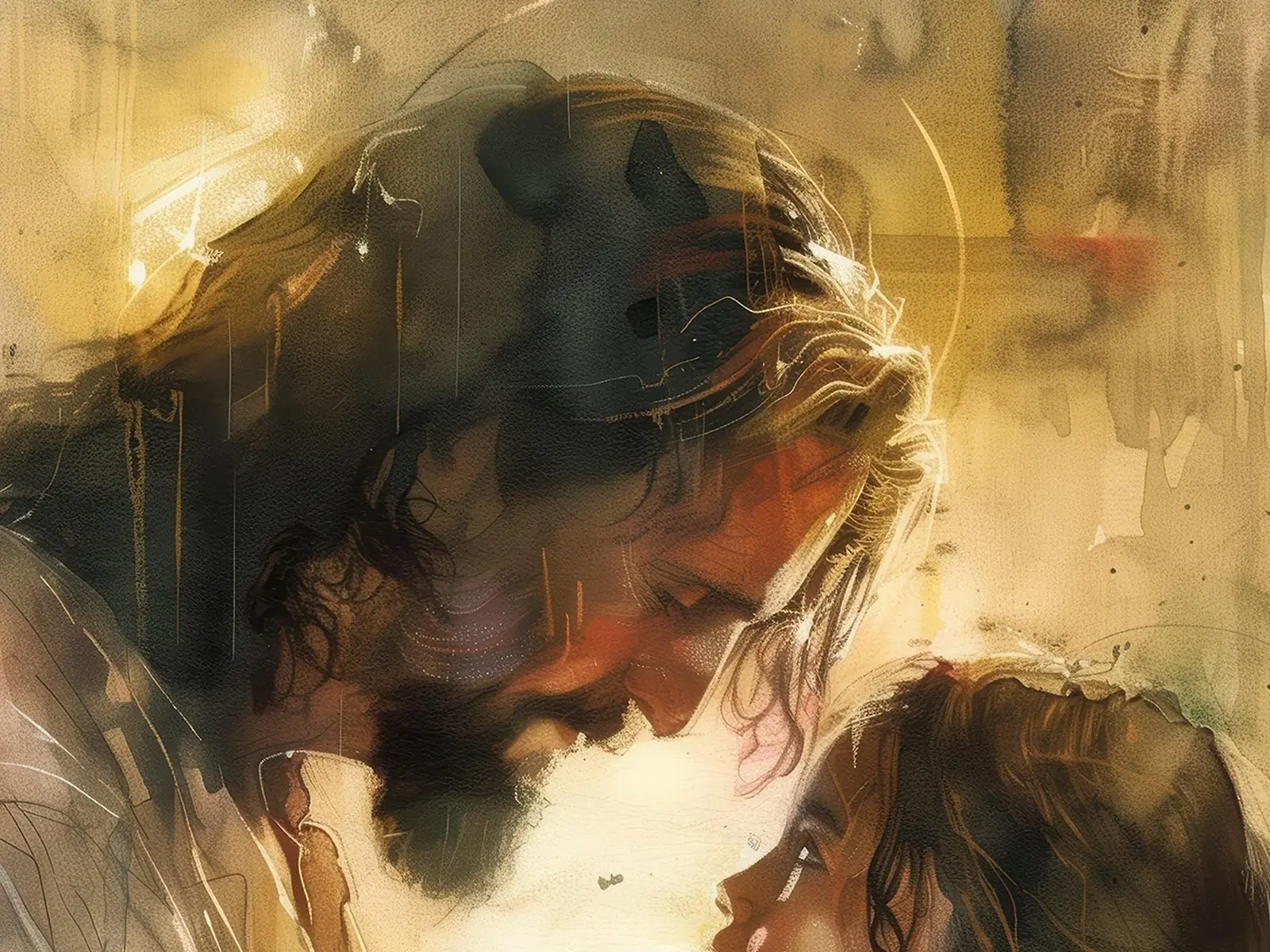
Jesus Raising the Child — Side View, Diagonal Warm Light (Joined Hands)
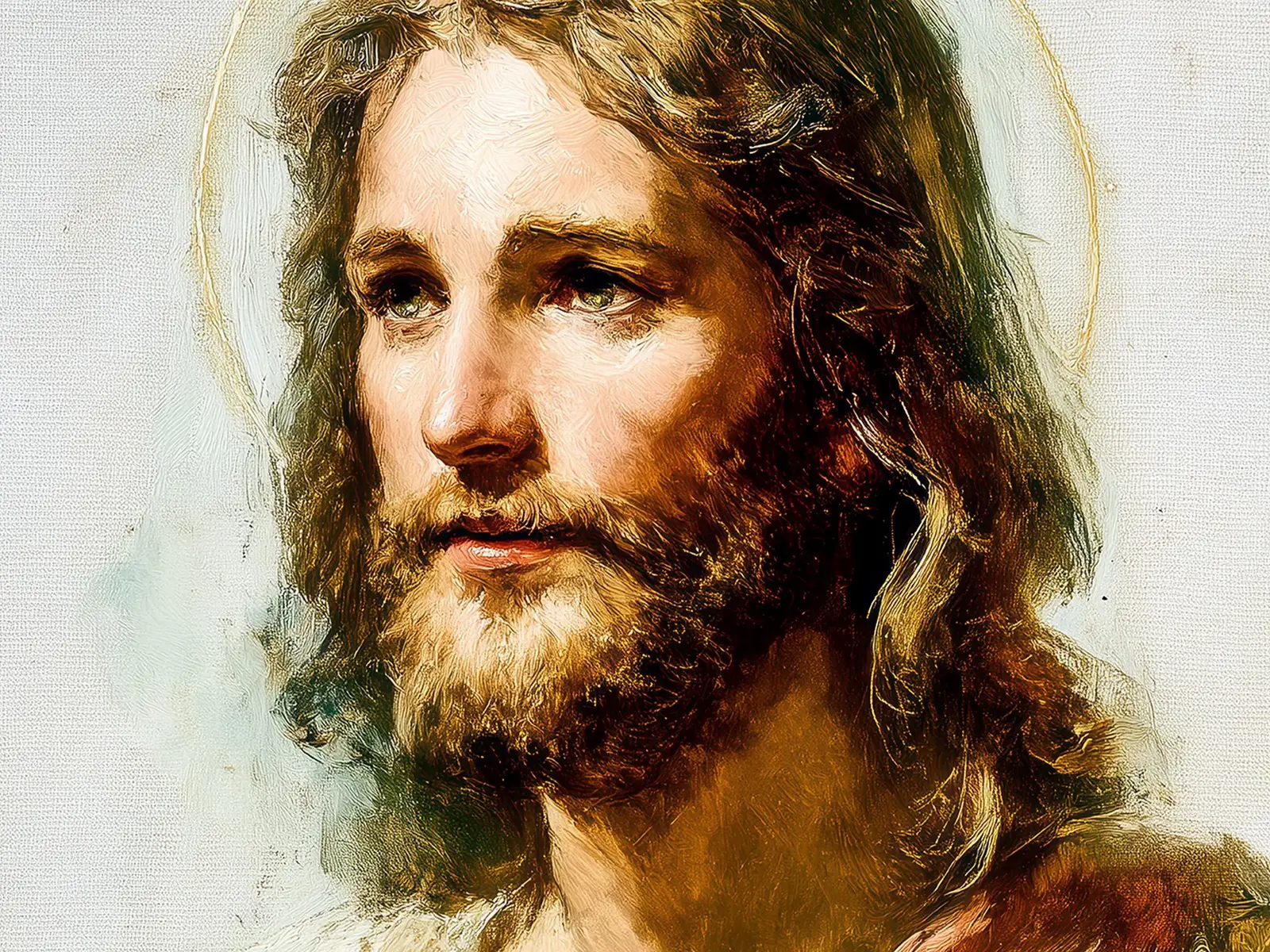
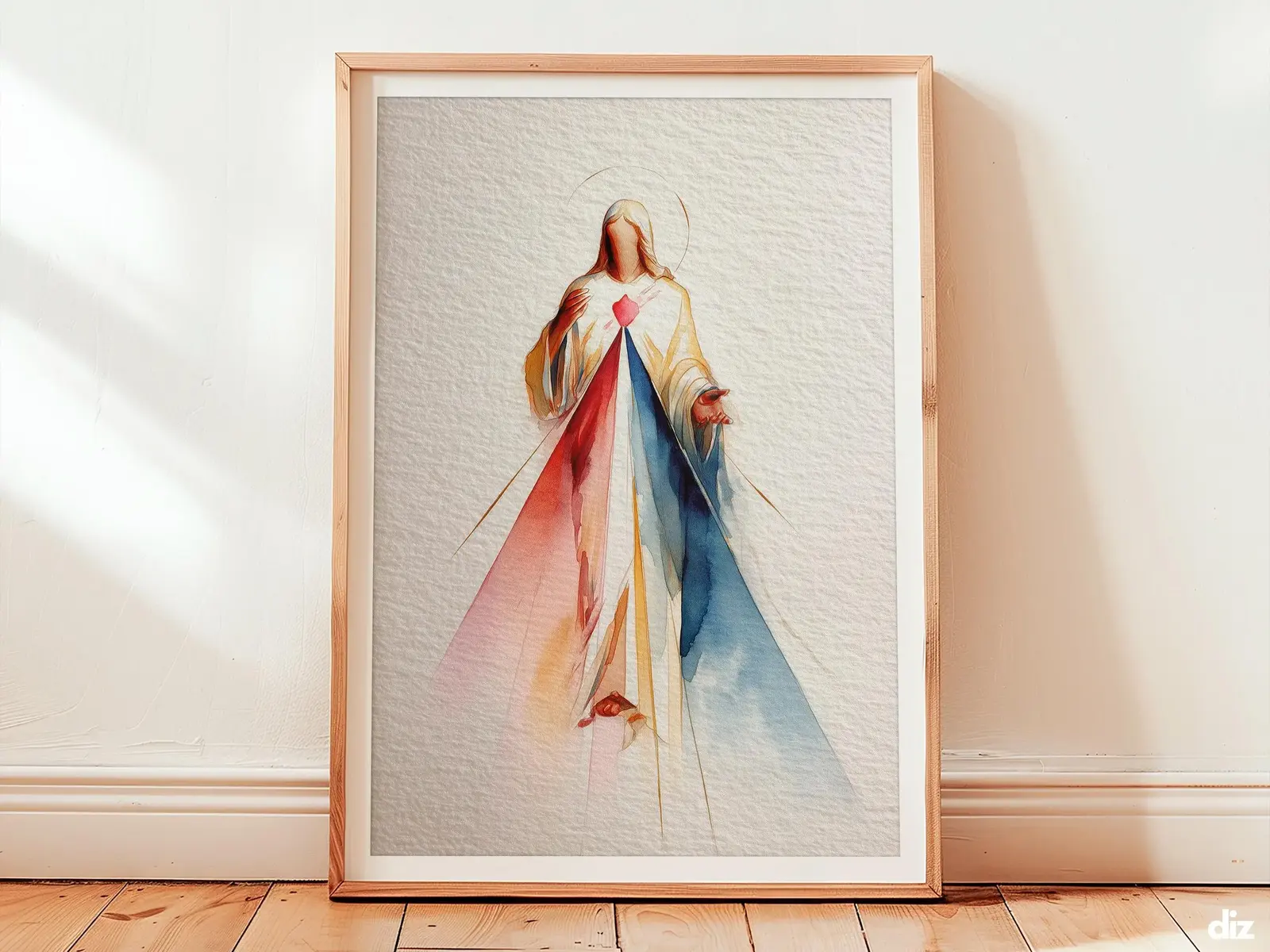
Divine Mercy — Frontal Gaze, Hand at Heart
Explore Christ — Minimal Devotional
Sacred presence reduced to stillness, form, and light.