Sacred Art Centered on Angels
Contemporary sacred art exploring angels as presence, messengers, and symbols of divine closeness — through light, gesture, and form.
Angels as a visual presence
Angels function differently from other sacred figures.
They’re rarely the center of attention. Instead, they shape the atmosphere around them.
In a home, angelic imagery often serves as:
- a quiet form of protection
- a sense of companionship without intrusion
- a reminder that presence can exist without visibility
This is why angelic art resonates even beyond formal belief. It speaks the language of care, not doctrine.
The symbols that define angels in art
Angelic imagery communicates through suggestion rather than narrative. Meaning is carried by form, distance, and light.
- Wings — not for flight, but for shelter and vigilance
- Light — a sign of presence rather than spectacle
- Stillness — angels rarely rush; they remain
- Downward or sideward gaze — attention directed toward humanity, not authority
- Minimal features — absence that invites projection and calm
Often, the less defined the angel, the more space the viewer has to breathe.
Choosing an angelic work for your space
People are drawn to angelic imagery for deeply personal reasons.
Protection and reassurance
Guardian Angels and protective figures are often chosen for entryways, children’s spaces, or moments of vulnerability.
Companionship during transition
Angels accompany thresholds — new homes, loss, illness, recovery, beginnings that feel uncertain.
At TheDizArt, these needs are expressed through two complementary visual approaches:
- Classic Emotional — warmth, gentleness, and recognizable form
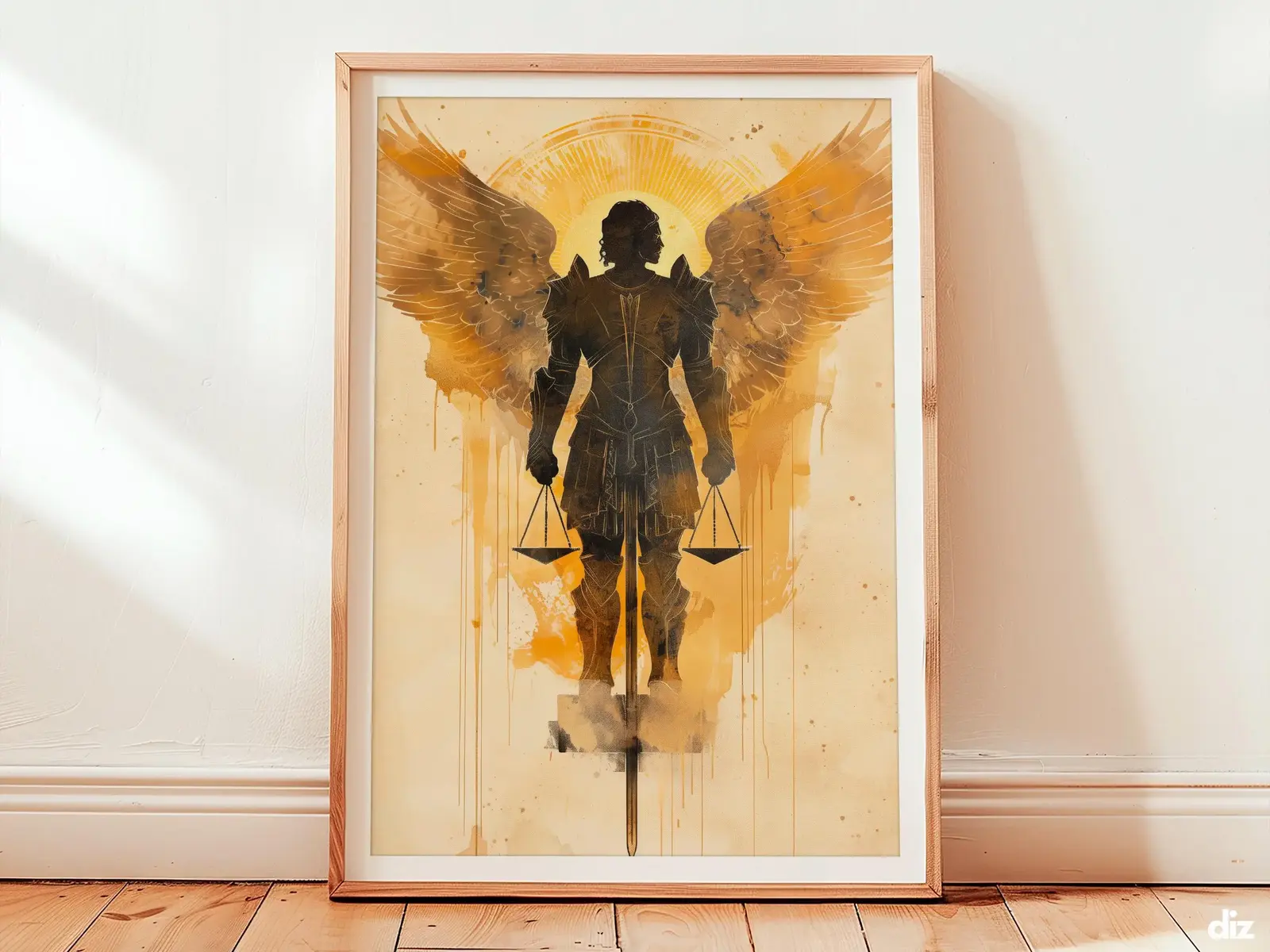
- Minimal Devotional — restraint, silhouette, and contemplative distance
Both approaches honor the same role: presence without intrusion.
Paths of angelic presence
Angelic art often gathers around distinct emotional roles rather than narrative scenes.
- Guardian Angels — protection, guidance, and quiet vigilance
- Archangels — strength, clarity, and moral resolve
- Angels of Presence — figures that accompany rather than intervene
Each path reflects a different way of being watched over.
Living with angelic art
Angelic imagery tends to work best when it’s not forced.
It finds its place naturally in:
- entryways, where protection and welcome meet
- children’s rooms, offering calm rather than instruction
- bedrooms and private spaces, supporting rest and reassurance
- remembrance corners, where words feel insufficient
Angels rarely ask for attention. Their strength lies in remaining.
“Angels are not distant beings.
They appear where attention becomes still.“
The following works reflect these forms of angelic presence — interpreted through warmth, restraint, and light.
Editorial Selection
A small curated selection reflecting the essence of angels across both styles.
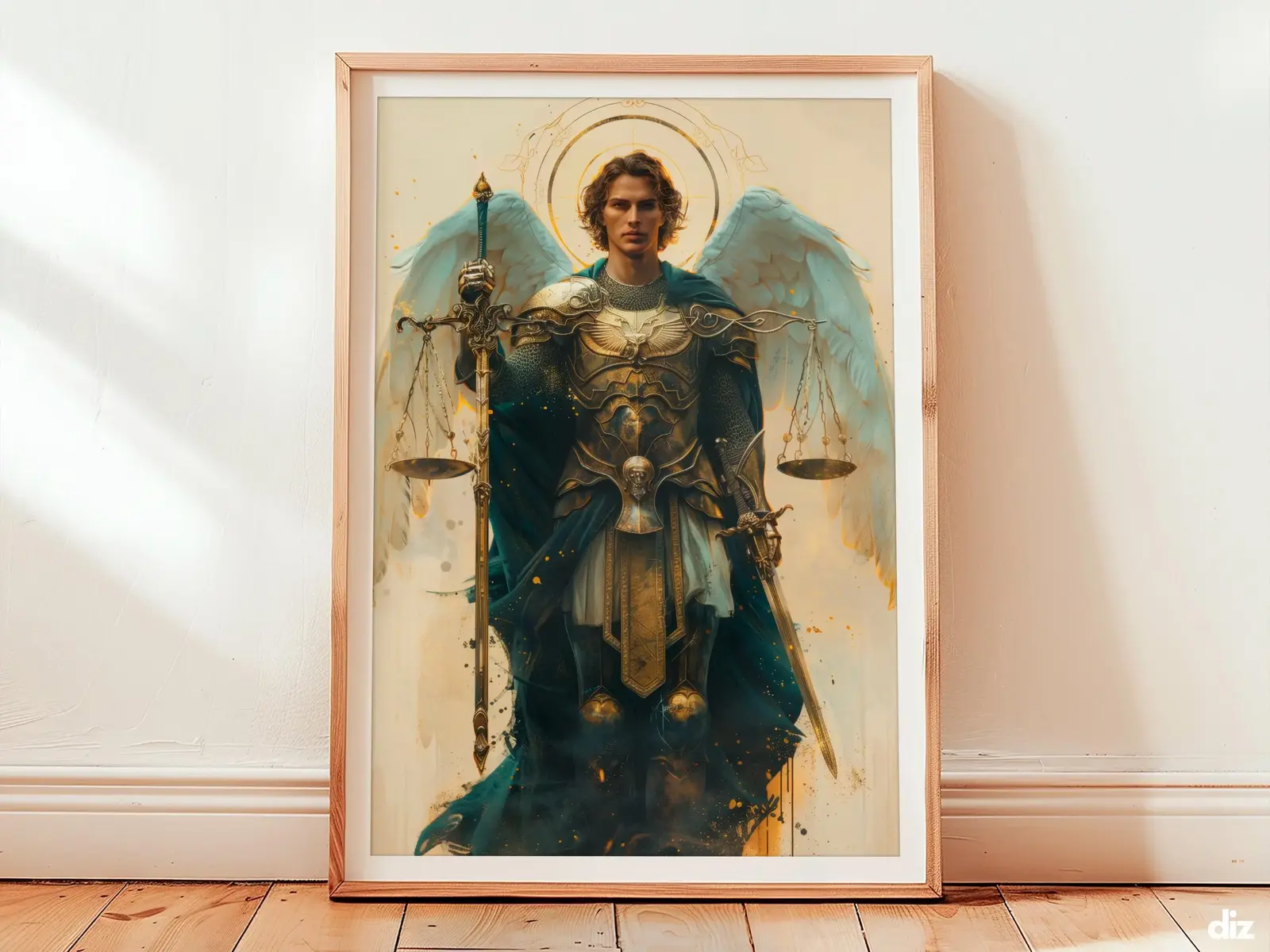
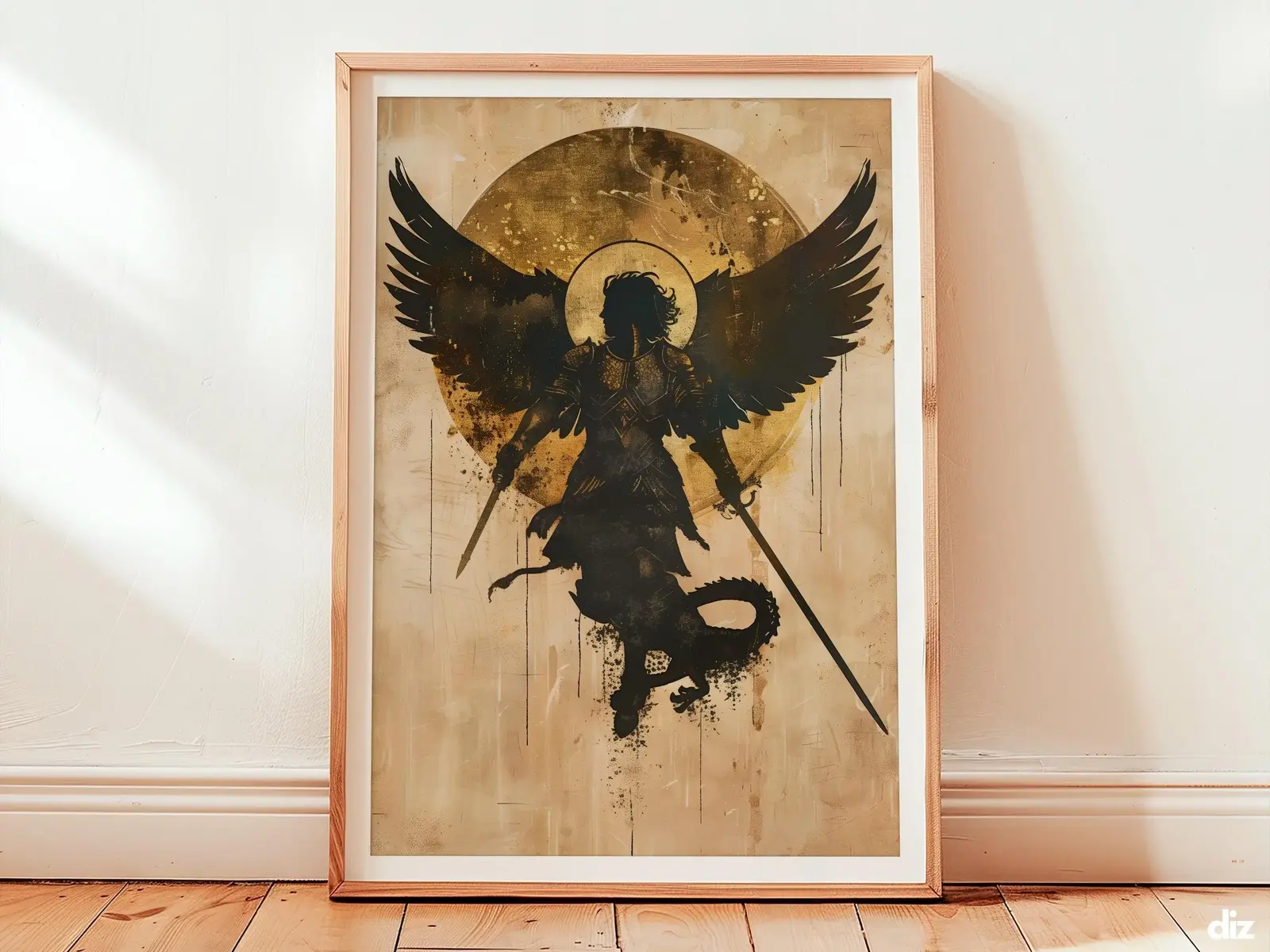
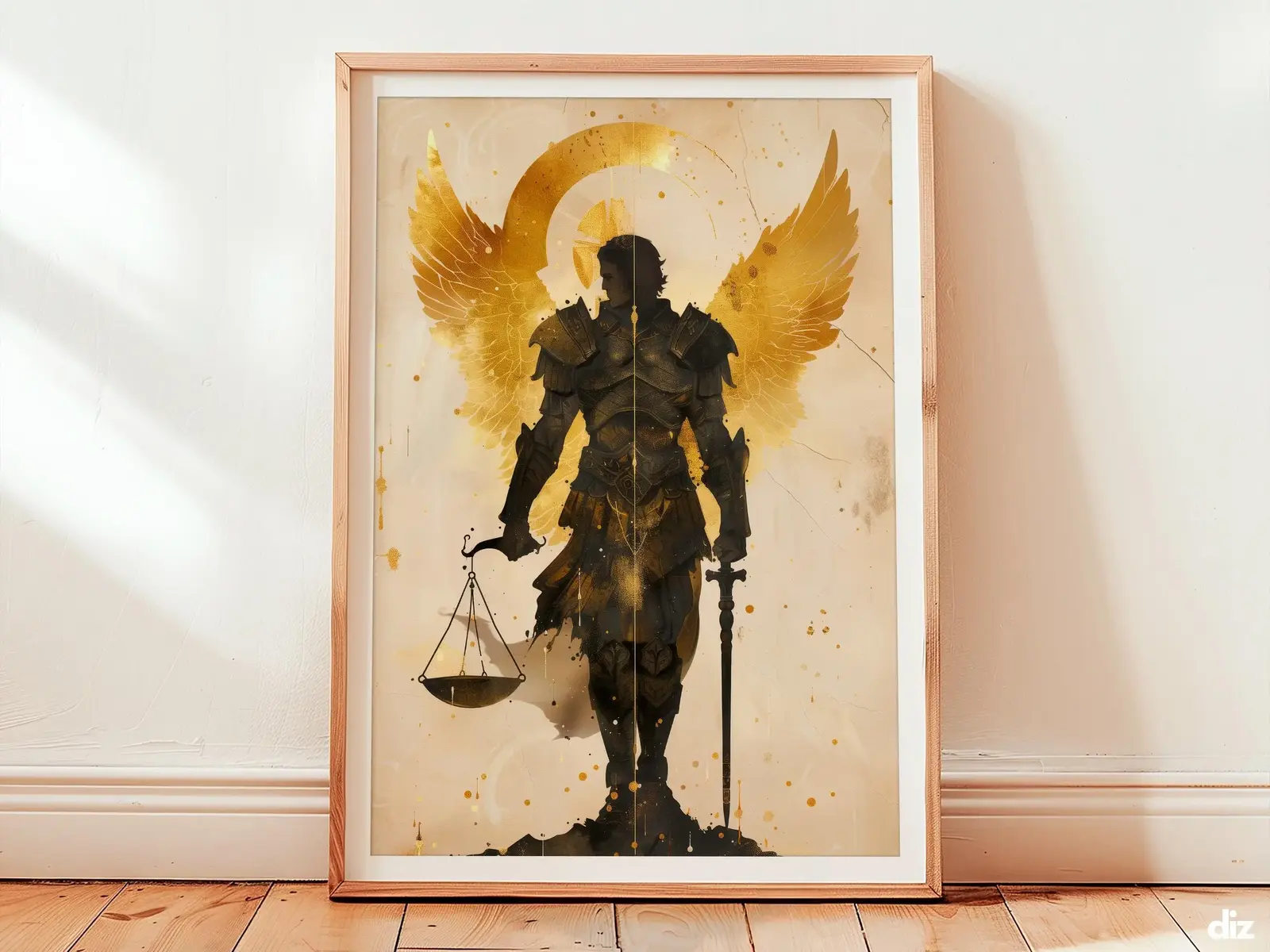
Archangel Michael — Frontal Stance, Scales Aflame (Sword at Rest)
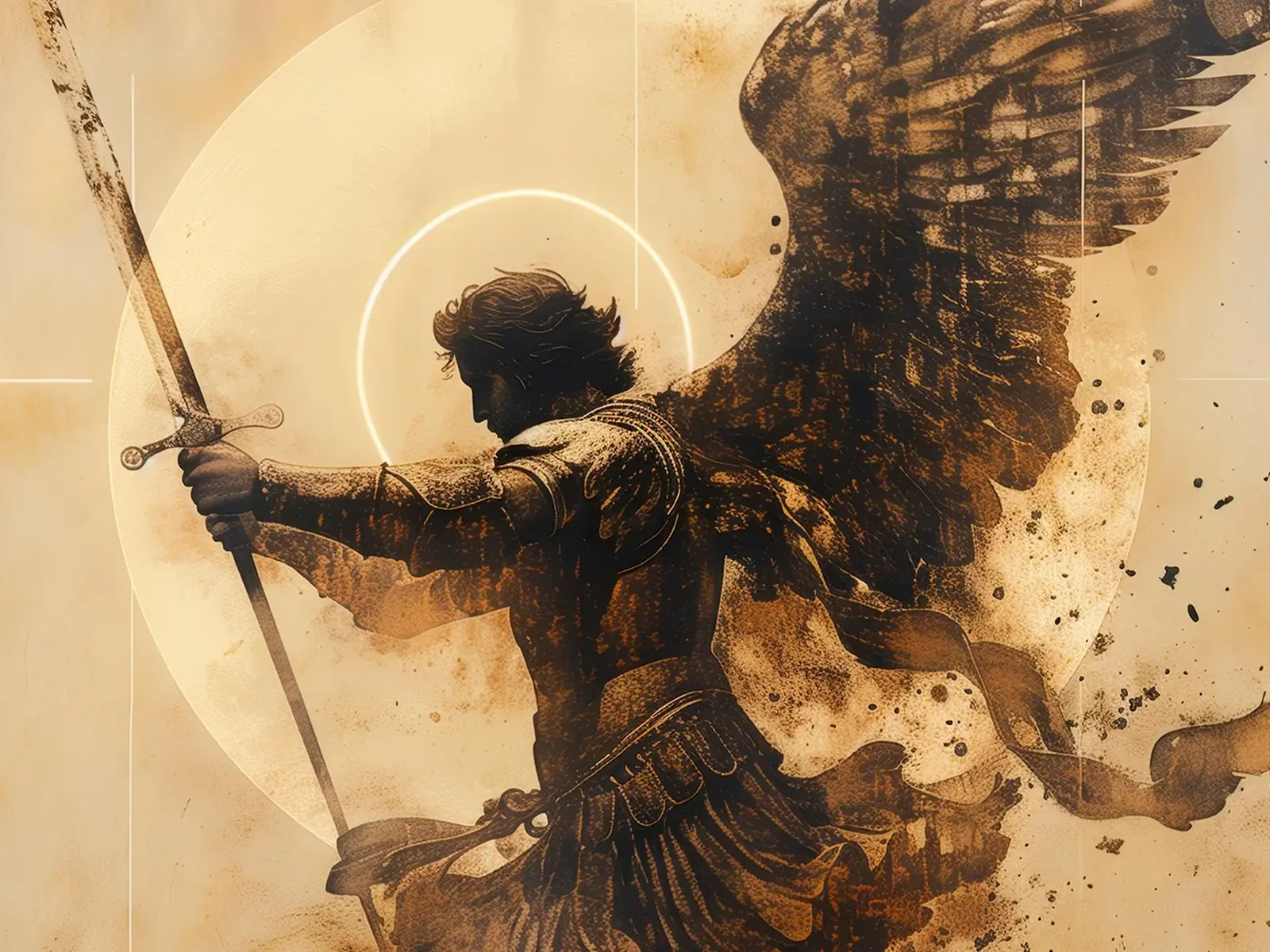
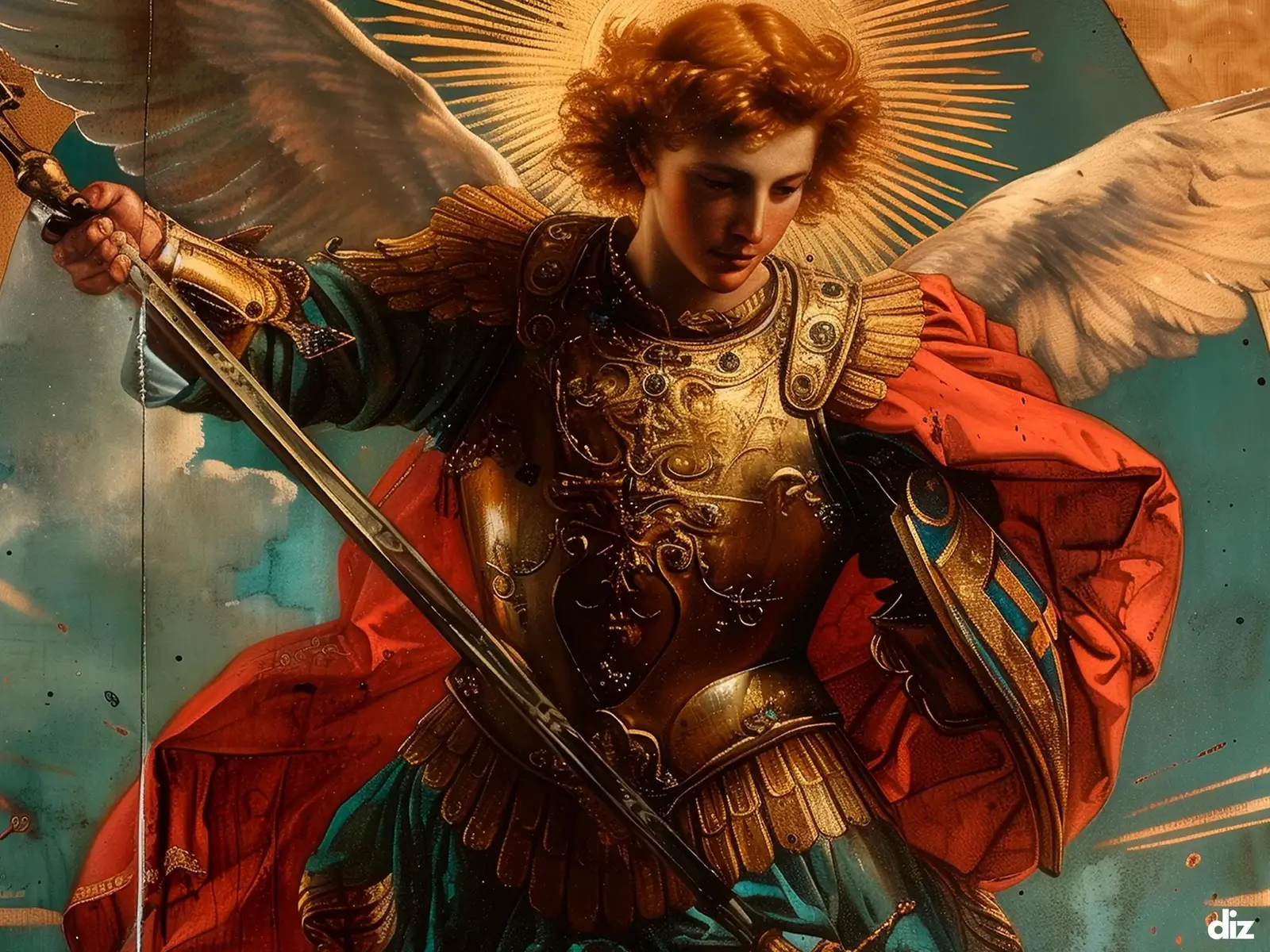
Archangel Michael — Sword Raised, Wings Unfurled
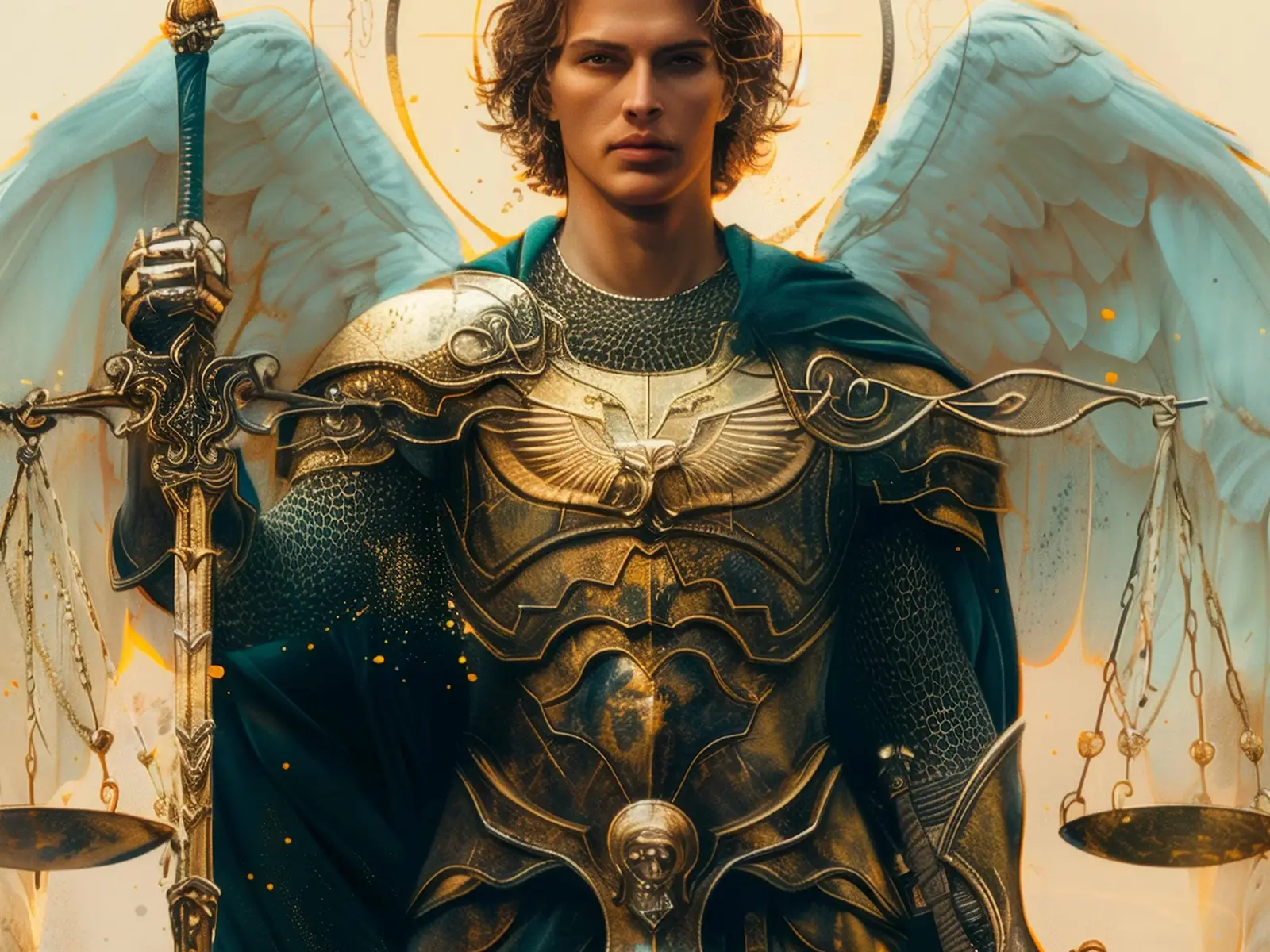
Archangel Michael — Raised Sword, Winged Justice
Explore Angels — Classic Emotional
Figurative symbolism shaped by light, movement, and sacred tradition.
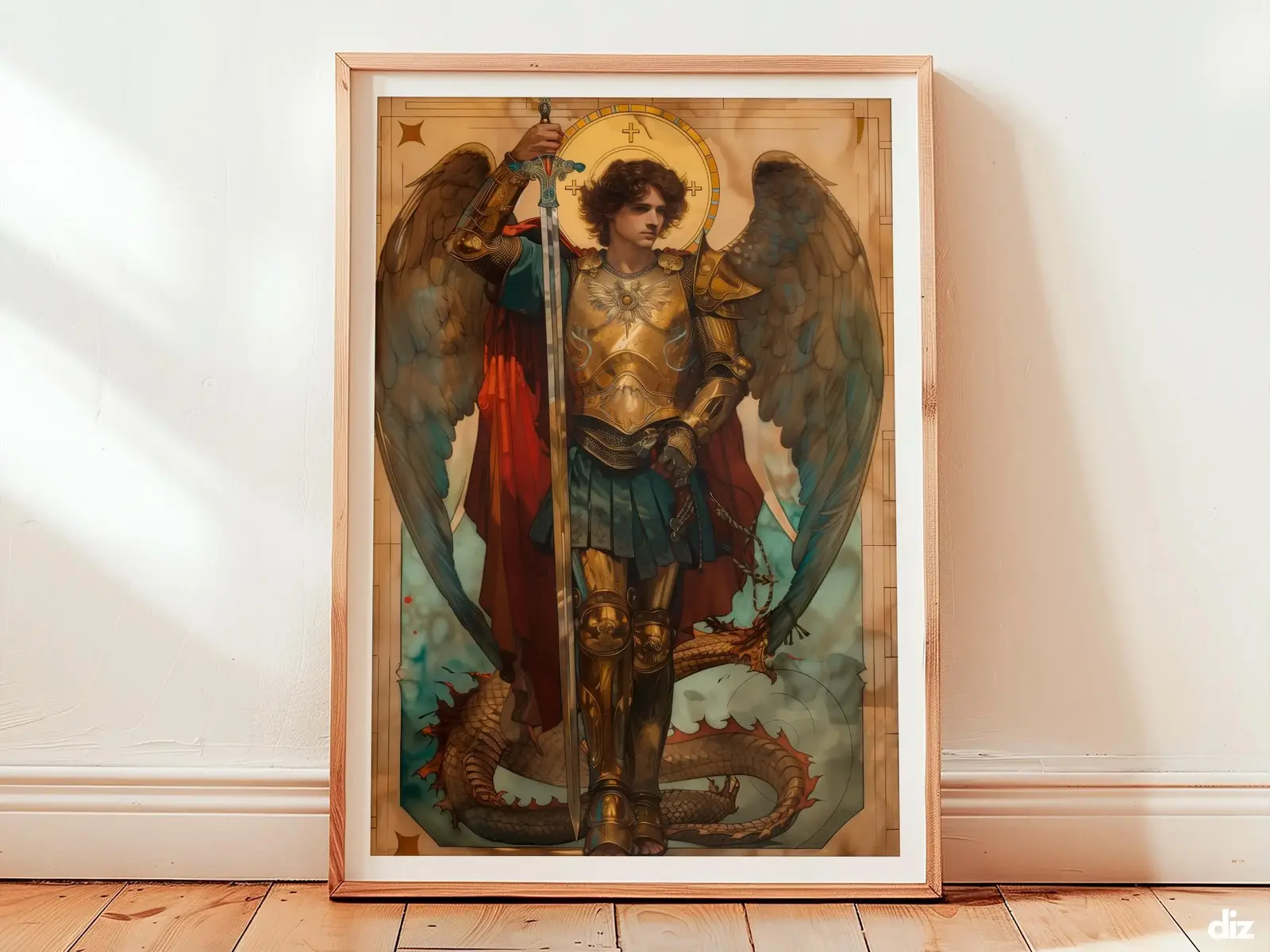
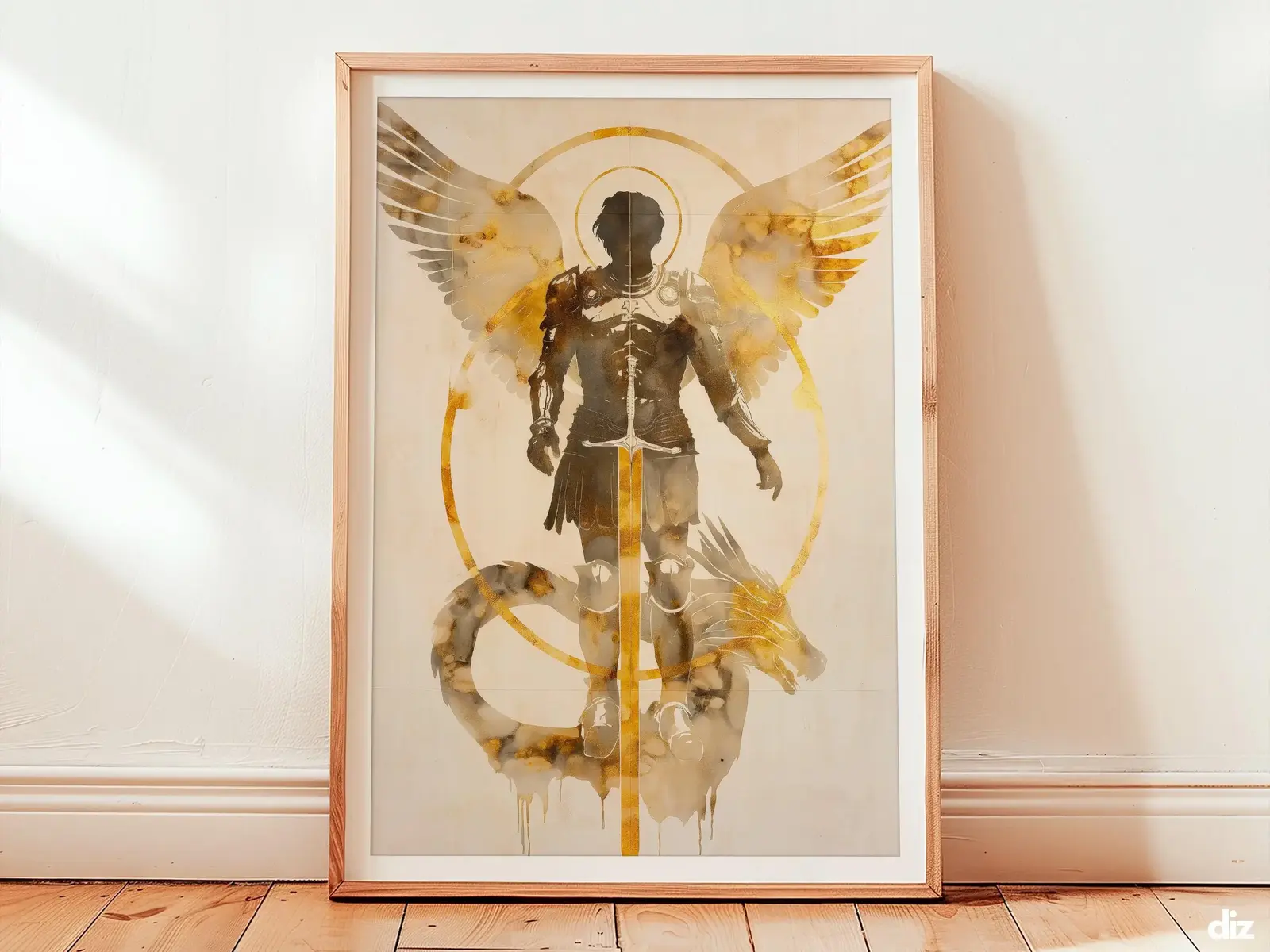
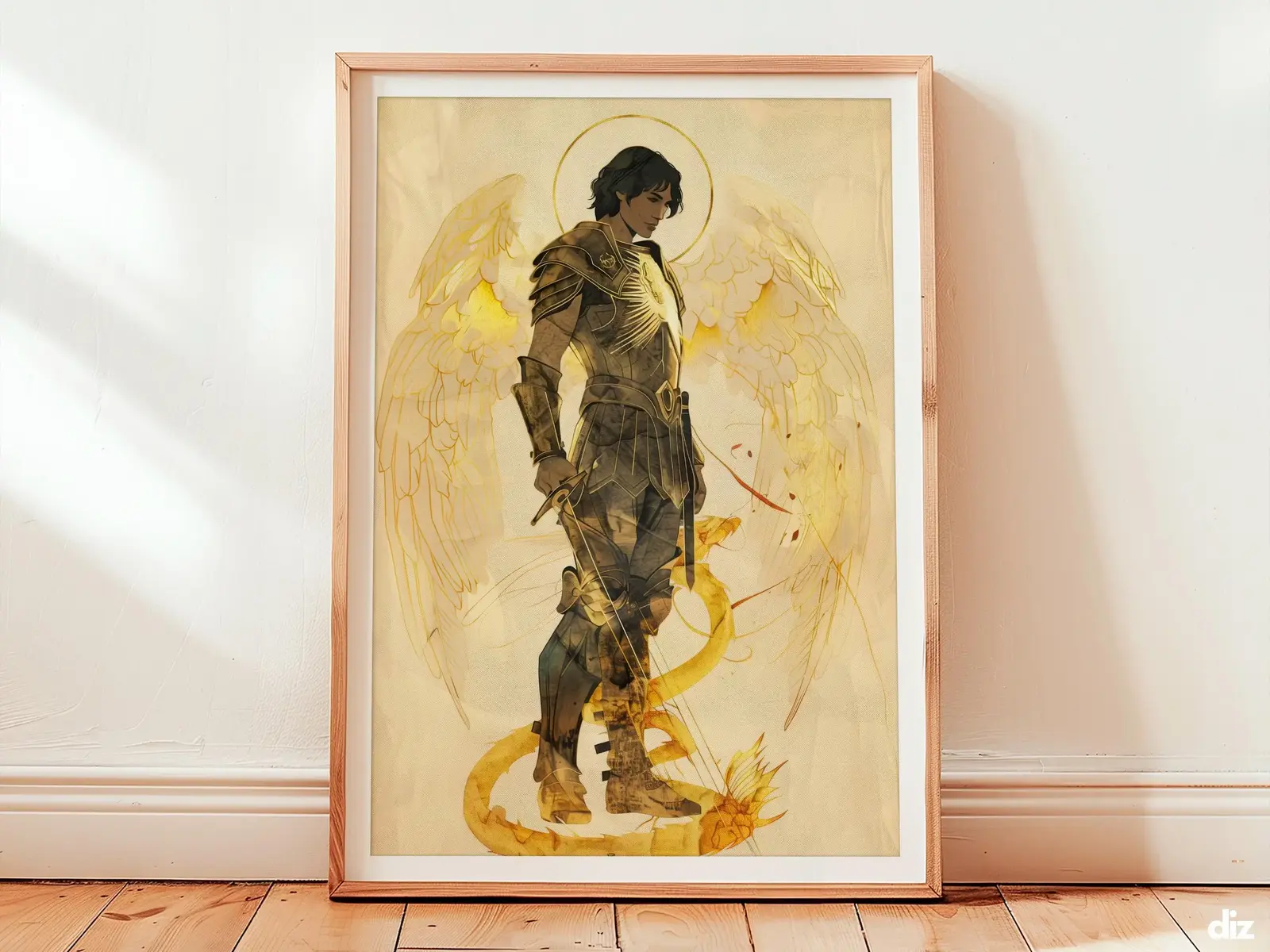
Archangel Michael — Full-Length Triumph, Radiant Sword (Dragon Below)
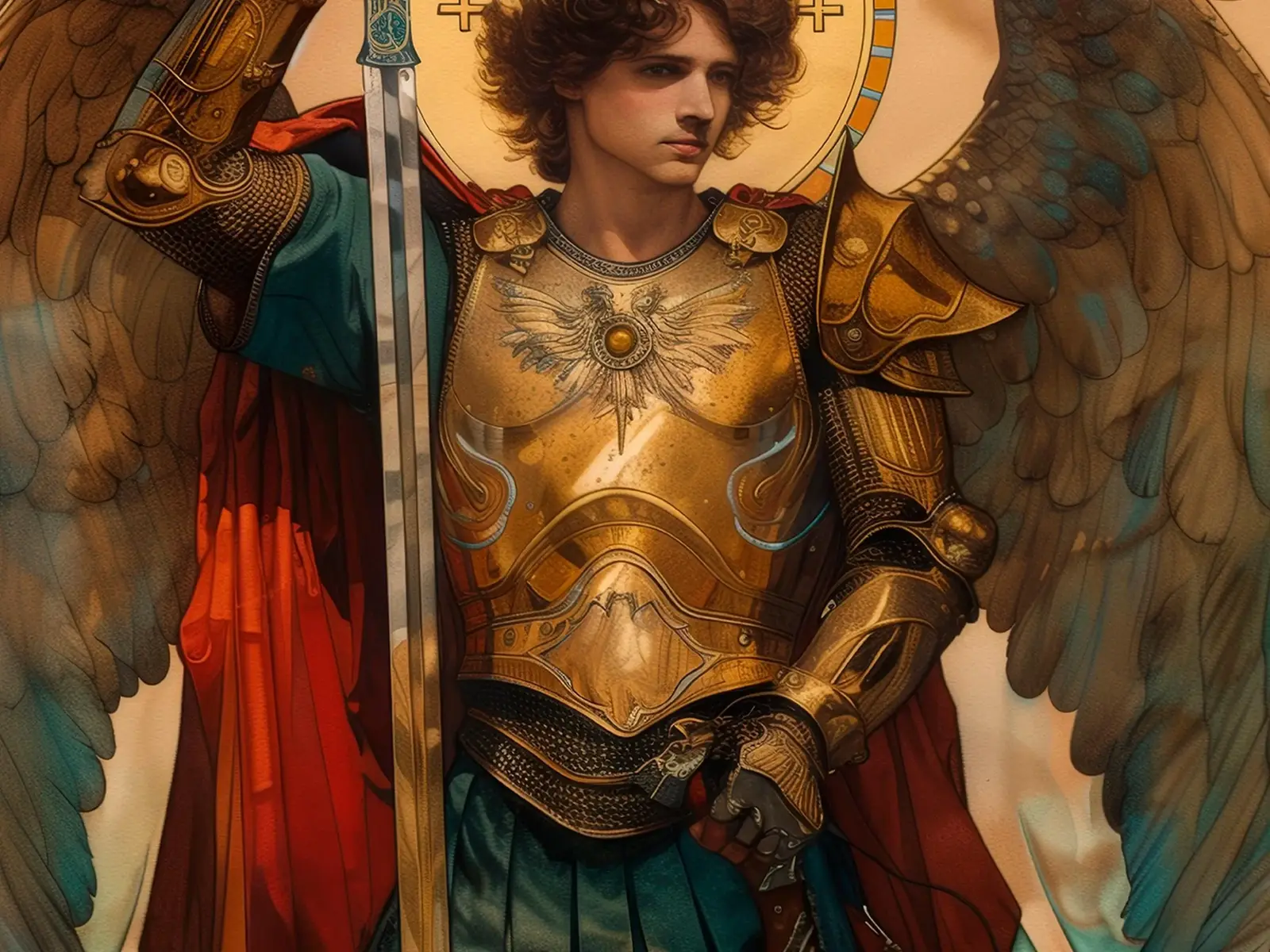
Archangel Michael — Raised Sword, Wings Unfurled
Archangel Michael — Sword Raised, Wings Unfurled
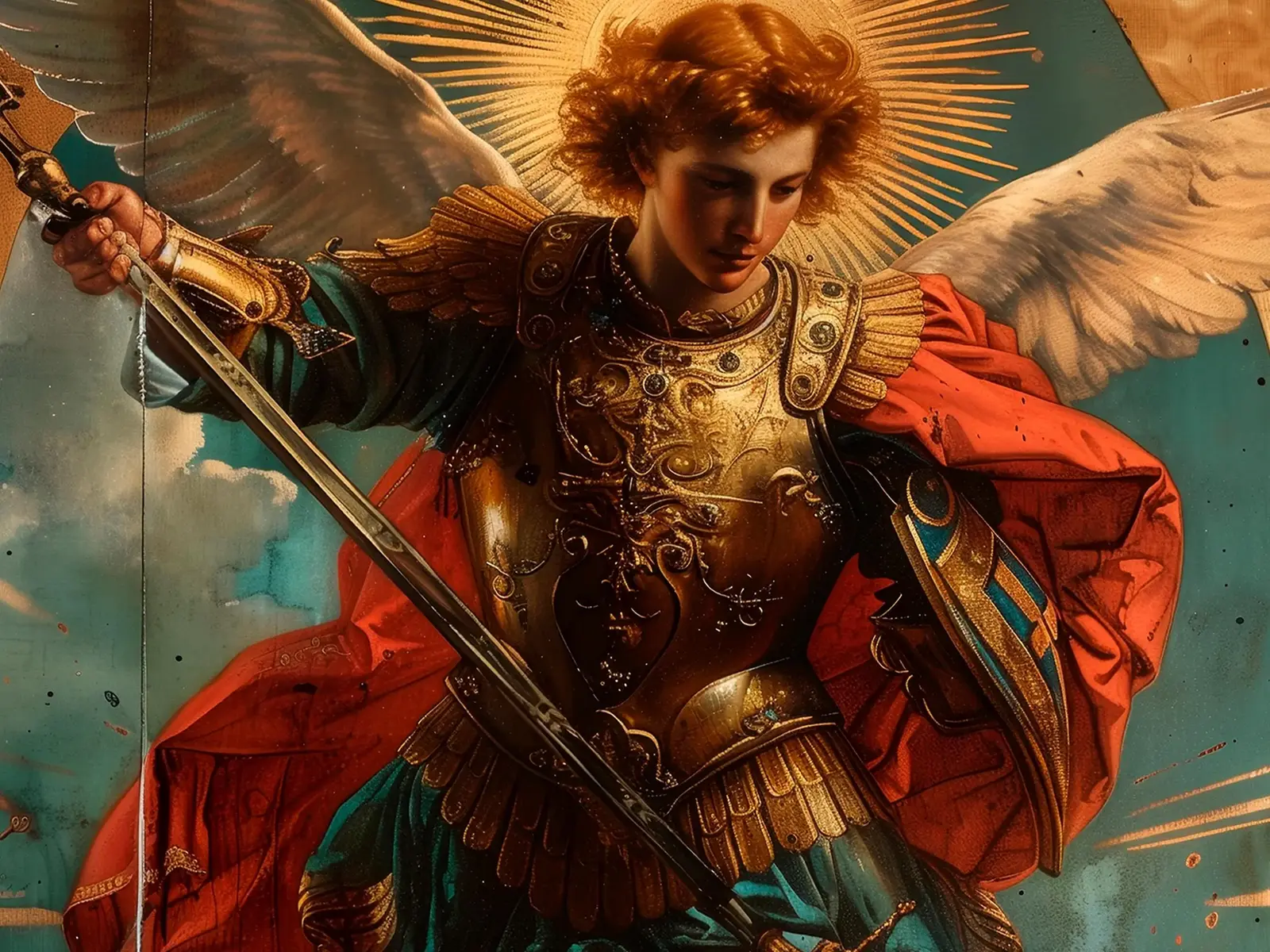
Archangel Michael — Sword Raised, Stormlit Radiance
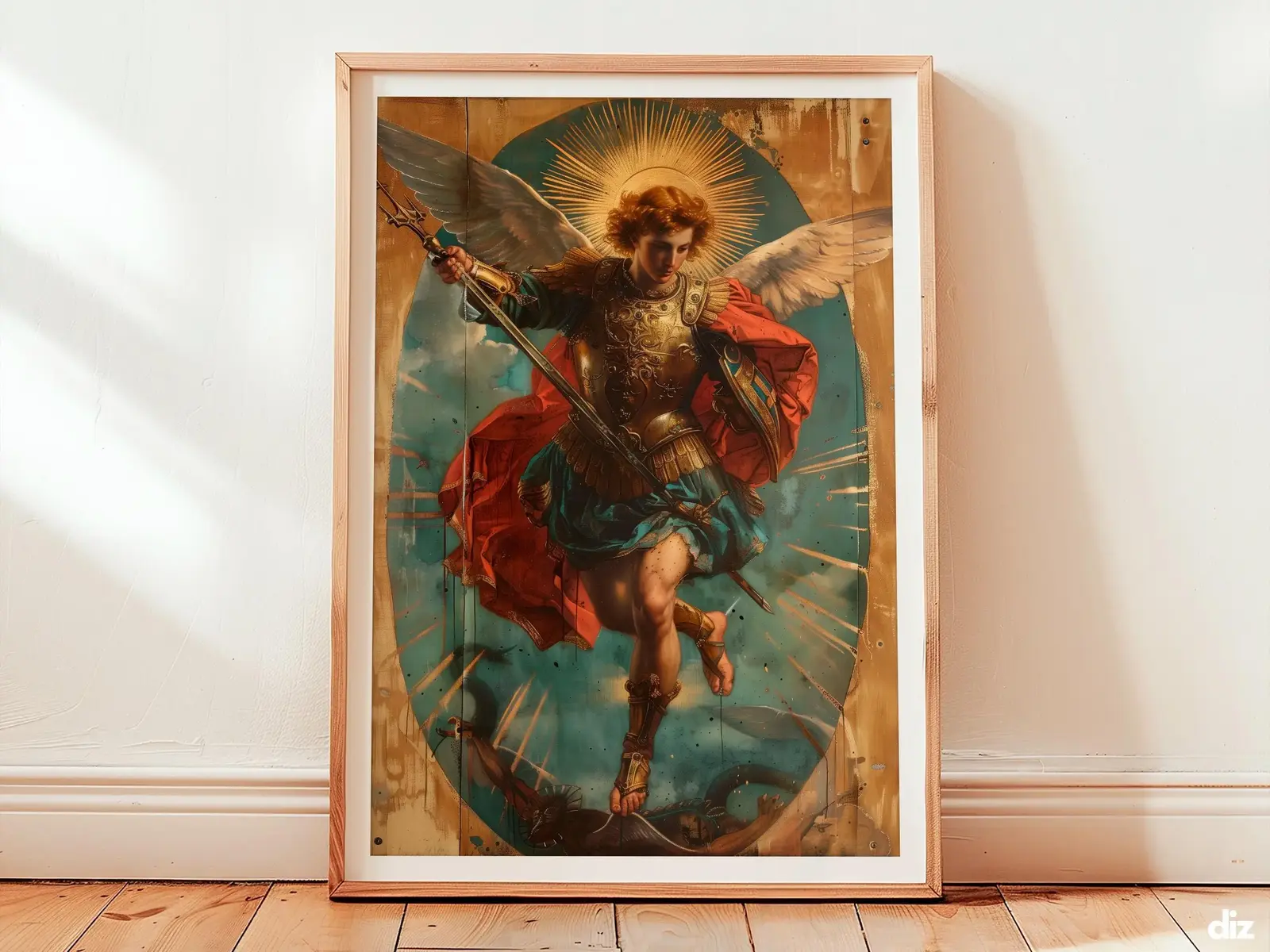
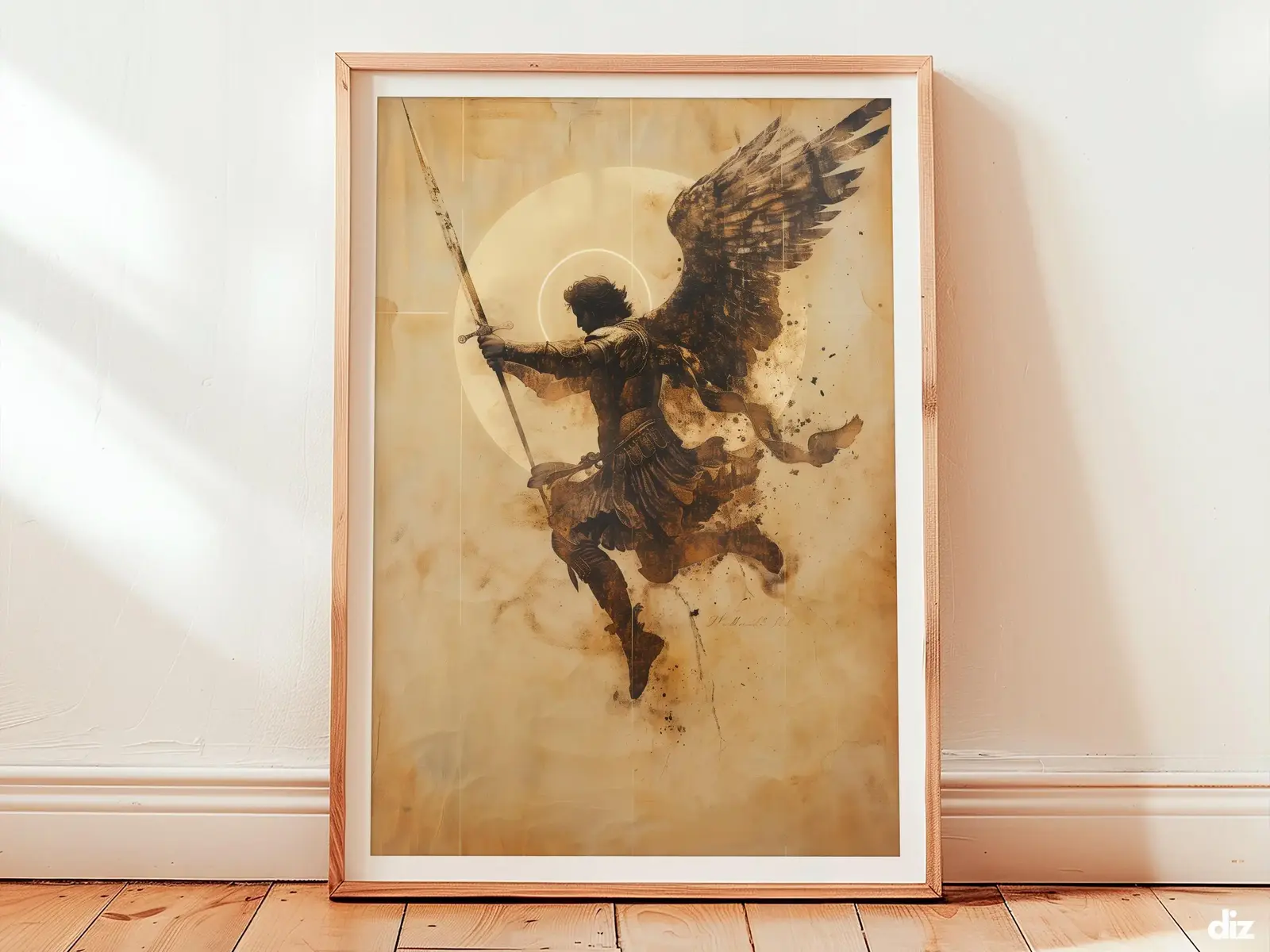
Archangel Michael — Mid-Air Descent, Lance as Axis (Dragon Fall)
Archangel Michael — Frontal Stance, Scales Aflame (Sword at Rest)
Explore Angels — Minimal Devotional
Sacred presence suggested through silence, form, and restrained light.